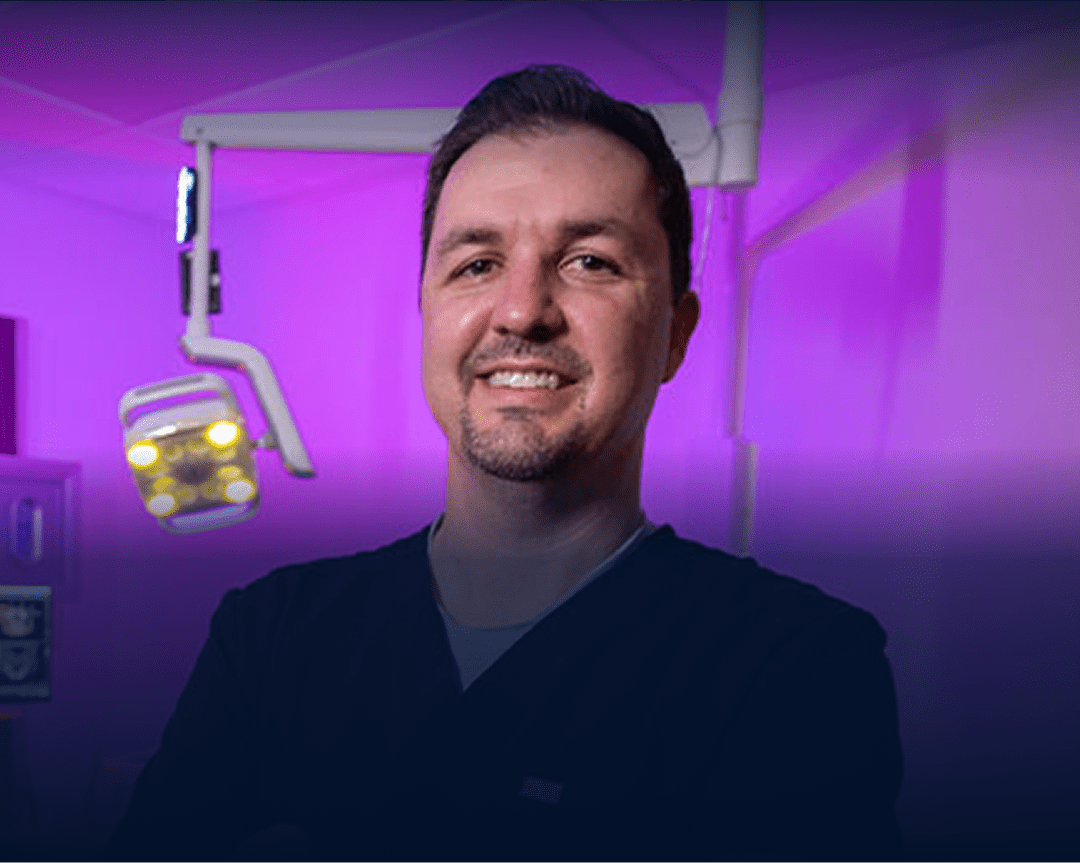


Guest: Dr. William Winterholler
Winterholler Dentistry & Implant Surgery



Dr. Will Winterholler turned down an oral surgery residency, moved back to Billings, Montana, and built one of the most respected full arch practices in the country — Winterholler Dentistry & Implant Surgery — from scratch, with zero patients and a $600,000 loan.
20 years. 6,000+ implants. Multiple locations. A team that never wants to leave.
In this episode he breaks down what actually built it: the leadership philosophy, the technology mistakes, the culture, and why his worst 3 months in 5 years were right before he found TIE.
Most full-arch clinicians believe scaling their practice comes down to refining surgical technique, but the real bottleneck is almost always non-clinical. In this episode, Dr. Will Winterholler breaks down how he built one of the country's top full-arch practices from scratch, revealing why patient communication, structured follow-up systems, and effective treatment coordination matter far more than clinical protocols alone.
00:00 Building a Full Arch Empire in Montana
Dr. William Winterholler
Yeah, you know, I’m honored to have you say that. It’s just something that’s just happened. I mean, at least I would like to say that. Of course, there’s been some intentionality to it, right? But yeah, I love Montana. I went to high school here. I decided to come back here after dental school. When I was in school, I didn’t really know what I wanted to focus on. My dad was an oral surgeon. I have an uncle that’s a dentist. Lots of relatives that were dentists, too. That’s kind of led me into the field of dentistry. Actually, I applied to an orthodontic residency and an oral surgery residency. I got accepted into an oral surgery residency, but just had a kid and was like, I don’t know that I want to do another six years of education. Talked to my dad on the phone and he said, “Well, just come on back to Billings. I’ll teach you everything you want to know about oral surgery and you can do the GP side of things if you want.” I was very interested in doing general dentistry because as a surgeon you don’t get to see the end result. So, I really wanted to be able to do that.
Chelsea Morrisey
That makes a lot of sense. When you moved back to Billings in 2006, full arch implants weren’t really mainstream at that point. When did you decide that this was going to be kind of a focus of yours?
Dr. William Winterholler
I was very interested in implants. You know, started off doing implant over dentures and whatnot. And then my uncle down in Arizona was starting to really kind of get involved in the early days of All-on-4. And when I saw him do it and talk about it, I thought, “Oh man, I got to try this.” So it was way back in the ultra analog days and no one hardly knew what a multi-unit abutment was, but we started to do it.
Chelsea Morrisey
Yeah. Wonderful. You’ve placed around 6,000 implants, but what still excites you about this procedure?
Dr. William Winterholler
Definitely the end result, but beyond that, of course, what gets us into implants or anything like that is I think everybody kind of finds a niche. And what I like about implants is somewhat the challenge of it. I like the technological side of it now especially. It’s just such an awesome field as it just continues to evolve and provide better and better results for people.
02:52 The Digital Workflow Behind 6,000 Implants
Dr. William Winterholler
So, we are fully digital having done this for 20 years. So, we used to be obviously fully analog and I think that helped in the digital process, but also kind of hindered us somewhat because we were slow to really adapt and adopt like we should. But right now, we’re fully, fully, fully digital. So, we’ve done a bunch of different things, some of which have stuck and some of which have not, but intraoral scanners for sure, obviously CBCT, we do some occasional segmented 3D printed models. We don’t do anything really guided unless it’s occasionally we do some zygomas guided, but you know we get the patient in, we have a consult, we take them directly into the records phase, we take intraoral scans, we work with a lab that does the designing for us and then everything with photogrammetry all the way to the end, all digital, 3D printing, milling, everything.
Chelsea Morrisey
Is there anything you feel like tech-wise, just since we’re on the subject of technology, is maybe a bit of a fad and something you think really isn’t worth bringing into the office and won’t last?
Dr. William Winterholler
Yeah, and somebody might argue this, but just for me it didn’t work. We bought a Rayface and we looked at all the other devices like a Rayface, you know, giving that three-dimensional picture to the lab technicians. We probably should have just talked to the lab guys first because they’re like, “We don’t need that.” Certainly, it’s a little bit helpful, but it’s another step and it takes time, taking the Rayface and sending it out. And so, if you take really good photos, that’s what the lab technicians, the designer, I think it’s a good point because like you said, you’re not dogging on anyone, but when doctors are getting into this, it’s a huge expense. So, I think it’s important for them to know what are the essentials and what can they kind of live without.
Dr. William Winterholler
Yeah. I’ve made every mistake there is in buying equipment. So, if anybody needs my number, they can text me and I’ll tell them, “No, don’t do it,” you know.
Chelsea Morrisey
You don’t have to say the brand, but talk to me about a few other mistakes that you feel like people should avoid.
Dr. William Winterholler
That’s a good one there. Again, I think this is a debatable topic to some degree because everybody finds what works for them, but I bought a device that allowed for 3D planning and then assisted placement. It’s just too difficult. It was in the way all the time, so now it sits in the basement and collects dust.
05:01 The Technology He Thinks Is Here to Stay
Dr. William Winterholler
I think we pretty much buy everything that comes out or at least research it. You know, I think it’s going to be nice when the photogrammetry and intraoral scan stuff, which it’s already there. It depends on which system you’re using. We’re still using photogrammetry, but it’ll be nice when another step is cut out where you’re not having necessarily to take a separate photogrammetry scan. I think that’ll be really nice. And again, I know people are already doing that. I’m just not doing that yet.
Chelsea Morrisey
Yeah. Have you put much thought into how AI might impact the dental office? And it’s okay if you haven’t.
Dr. William William Winterholler
No, I tried to dive into the AI thing pretty hard in regards to what it can do for us, both from a front office perspective all the way back to the back office. I use AI personally right now and I highly advise people to do this. At least for me, it’s been sort of gamechanging. I record all my consults with an AI device and then it creates a summary and then I upload that and it’s really, really useful to be able to go back and reference what was said with the patient. And I think it’s also good for us to remind the patient as well and be able to show them like, “Hey, this is what we talked about.” A lot of volume on four is delivering on expectations and also setting expectations in the clinical side of AI. I can’t wait to see what it’s going to do for us. I think it’s going to make designs better and faster and help us maybe see things ahead of time, particularly if you’re doing really good case planning.
06:19 Using AI to Improve the Team
Dr. William Winterholler
Yeah. Those are hard things to accept, especially if something’s working. You think, why change it, right? Sort of the old “the enemy of good is perfect,” but I think the enemy of good is complacency. So you have to always be kind of evaluating and trying to improve, right?
Chelsea Morrisey
I love that. And I think one thing here at The Implant Engine that we’ve maybe in the early days struggled with balance is we’re a very innovation-forward team. And I think that’s a really good thing, but sometimes you can move almost too quickly. I was listening to a podcast with Jeff Bezos and he was talking about this concept of a one-way door or a two-way door. And that sort of changed everything for me. The two-way door being something that you can move quickly on and easily kind of return if it’s not quite right or doesn’t pan out like you’d expect. A one-way door being something that would be really hard to come back from.
Dr. William Winterholler
So, for us here at The Implant Engine, and maybe this would be helpful for someone listening, if it’s a one-way door, then the amount of research and planning and documentation that goes into that decision is significantly larger than a two-way door. And that allows you to be like, is this a one-way door or a two-way door? And if it’s a two-way door, then my team can be nimble without really having to go up the ladder and I don’t need to hear about it and stuff like that. But if it’s a one-way door, then it involves more of the team. But I think for some folks, change is hard and this industry is ripe with change. And I think if you’re not able to change, then I think you get left behind a little bit.
Chelsea Morrisey
Oh yeah. You got to hold on tight because you’ll get left behind very quickly.
08:14 Why Team Matters More Than Technique
Dr. William Winterholler
Well, I haven’t always had that. That’s part of the whole process of evolving. I’m happy to say that we do now, but we haven’t always had that. Some of it came out of necessity. It’s like if you’re going to grow the right way, then you have to have the right people. And the right people doesn’t always mean spending the most money to hire the right talent. It just means hiring the right talent. And beyond that, a good team culture is obviously everybody has to be passionate. That’s like the number one thing. I think one of the big things that gets overlooked is my team knows I have their back and I know they have my back and we really practice a lot of the over here psychology stuff too. So a lot of the messages that we’re telling our patients, I’ll name one of my team members. I know that Blake is going to tell a patient about a question that they may ask about their treatment, whether it’s pre-treatment or post-treatment. She’s going to tell them the exact same thing that I’m going to tell them. And if she doesn’t have an answer, she’s going to get me and I’m going to tell them and then she’s going to back that up. It’s very important for patients to have that. From a clinical side, everybody knows their role and has to know their role, but they also kind of have to know someone else’s role because ultimately it’s going to happen. Someone gets sick, they can’t come in to work for whatever reason, or they get busy, or ultimately we’re going to be in a high stress situation, and a patient that we did surgery on two weeks ago is going to have a broken temporary, and that person’s going to have to leave the room and go handle that. So, it’s super important that the team is supportive of one another and passionate and trying to adopt and adapt to the new.
Chelsea Morrisey
And how do you get everyone on the same page like that? Because it sounds like you guys almost have an unspoken language there at the office, but I’m sure it wasn’t always that way. How did you guys arrive at that?
Dr. William Winterholler
Number one is fitting people into the right spot. So, I mean, I have somewhat of an advantage in that our practice is not just all-on-four focused. We are very all-on-four focused, but there’s two other providers. So, we have a lot of staff and so you kind of see people come in and they start to shine and then we start to really bring them up because you see that they have a passion rather than they’re just here for a paycheck, if that makes sense. And so, we’ve sort of elevated people as they’ve started to elevate themselves into the right roles and every one of them just fits in where they’re supposed to and they do their job well.
Chelsea Morrisey
Yeah. So I think a little bit of what you’re saying is you’re getting to know your team well enough to know what their passions are and helping nurture those passions even if it’s not what you brought them in for originally.
Dr. William Winterholler
Yeah. Some people just have it. And they just have that, you know, they’re great at communicating or they’re great at communicating and understanding the clinical workflow. Everybody’s got to be a good communicator to be on a team like this, but you know some people are better at communicating and some people are better at the technological side of it.
11:23 Leading by Example
Dr. William Winterholler
I think out of necessity from growing a practice from scratch. I just opened the doors here 20 years ago. You have to be able to lead by example and you have to know all the roles. So I think the lead by example is the most important part. There’s no patient interaction, patient situation, clinical situation that I can’t jump into and wouldn’t jump into to have the back of that person who needs the help or whatever. So again, it’s that sort of mutual support that I think is so vital to that.
Chelsea Morrisey
Yeah. Is there anything in practice that you’ve implemented to let them know that you have their back in terms of pay structures or bonuses? What does that look like in practice apart from just saying it?
Dr. William Winterholler
We have certain people that are in different leadership roles here and we do have a group of individuals who are involved on the highest levels of what we do get a bonus and of course it’s a nice bonus and so they’re highly motivated. But not everybody’s motivated by that. You know, some people are motivated more by the bucks at the end of the day. But, you know, a lot of people, I think it’s a lot about saying, “Hey, I really appreciate what you did today.” Or, “Thank you for helping me with that.” Maybe a patient’s frustrated about something and they’re not clearly understanding what we discussed sort of in the pre-operative situation. And I don’t really have to troubleshoot it because the assistant or the front office person that is my right hand in this has already taken that down a notch. And then that over here psychology thing comes into play. If I end up having to follow up with the patient and I’m saying the same things and they’re hearing it again and they’re going, “Okay, maybe I do remember that from the conversation or the consultation.”
Chelsea Morrisey
And that shorthand that you guys have, I’m sure that’s just gotten better and better over time. Do you guys do daily huddles? Is there, within particularly the implant world of the practice, what kind of meetings are you having to get on the same page about stuff?
Dr. William Winterholler
Yeah, we have a huddle every single day. We also have a timeout every morning before the case starts. So, we have a whiteboard in the surgery room and usually it’s mostly filled out by the time I get in there, but as soon as the patient is sedated and ready to go, we have a quick timeout. And these aren’t all my ideas. I’m not special in that regard. Some of these things are things that people have suggested and we’ve implemented and found them to work really well so that the communication is tightened up and the notes are dialed in and all of those things.
13:53 The Power of a Daily Huddle
Dr. William Winterholler
So we do a morning huddle so we go through the schedule for the day. It’s not long, you know, it’s 15 minutes and it’s right before we start seeing patients. Everybody is supposed to come prepared for that meeting and for the most part they do. Cloud-based software has really changed the game for me. I’m able to at night go through notes from the previous day, notes on the upcoming day. Try to be prepared for the meeting because if you’re prepared, then the meeting goes a lot better and the information flows faster. It’s really about just getting everybody on the same page. Oftentimes there’s some little bit of information that you might remember from a certain patient that they don’t that’s going to really help them when they go into the room. We do a lot of dentistry in our all-four stuff where our assistants and I are working very independently. It doesn’t mean that we’re not checking the boxes like we should as a provider, but there are situations where the assistant is handling, you know, 90% of the appointment and I’m in there just for 10% of the appointment. There’s a lot of relevant data that needs to be relayed about each patient before you see them.
Chelsea Morrisey
I think it goes back to you leading by example. You’re reviewing the notes every night and you’re coming prepared. So, it would be pretty awkward if you were prepared and they weren’t, right?
Dr. William Winterholler
To that another area where you walk the walk. You have to because you’ll get caught and you’ll look dumb. And it’s okay occasionally when things are going sideways in life and you’re busy or you just came back from vacation. But for the most part, you got to be leading by example. Be the most knowledgeable guy in the room if you can be and then you’re forgiven when you don’t remember a certain situation or you didn’t have time to read something.
15:28 Building a Practice People Want to Work In
Dr. William Winterholler
I mean, I think it happened and I think it evolved beyond that. So, I don’t wear scrubs. I wear a scrub top, but I wear jeans. I’m just comfortable in jeans. I’m more comfortable in jeans than I am in scrubs. And so that gives a little bit of a casual feel, but everybody knows when it’s time to be professional, and we are professional at all times. But yeah, all of our offices, I feel like we’ve tried to create not necessarily the ping pong table atmosphere, but an atmosphere in our main office. It’s 10,000 square feet. We’ve got a whole upper floor that has nothing to do with clinical. It’s just an area where we have some very awesome spaces. There’s a big TV, some couches, a really nice break area for a lot of the employees take a nap over lunch. So, we do take a lunch. I think that’s super important for me anyways. I know a lot of people don’t, but it allows us the ability to wind down a little bit for a minute and then wind back up and get a little bit of a reset and a refresh. We are sarcastic and we joke around a lot, but we have a very professional and warm and inviting and beautifully designed and decorated office to exude the confidence and help patients feel that, hey, these guys know what they’re doing because this place is put together.
Chelsea Morrisey
Mhm. And you think a key to your success is kind of how your practice looks and feels as well?
Dr. William Winterholler
Yeah. Early on when I started 20 years ago, I interviewed with a couple of dentists here in town and I looked at buying their practices and they were old, dilapidated, crusty. And I met with three different bankers in town and the first two shot me down because I said, “Hey, I want X amount of dollars.” I think at the time I was asking for 600 grand and I didn’t even have a single patient. And I met with a banker here in town who was awesome. She was like, “Yeah, I get it. That sounds great. I love it.” So they gave me the money and we built a brand new beautiful office. And a lot of people right off the bat were like, “You build a really nice office, everybody’s going to come in and say, I’m paying for this guy’s nice office.” You know what I mean? But I don’t think that’s true. I don’t think patients feel that way. I think patients want to feel like they’re going to the guy who has the nicest office because it’s comfortable and because if you have that nice office, you better know what you’re doing because how are you going to pay for it?
Chelsea Morrisey
Yeah, totally. And I know not everyone, we have plenty of thriving full arch docs that are in more outdated buildings and that’s not a requirement, but I do think that when given the option, it sounds like it’s been beneficial to both of you to have that new building and it’s made a massive impact on your business as a whole.
Dr. William Winterholler
Well, you talked about culture earlier and team. People like to go to a nice place to work. They like to be proud of where they work. We have nice swag that our employees have, you know, and they’re proud to wear it. We’ve got some kind of custom tailored hoodies that they wear and they’re really nice. I don’t like to give out cheap stuff because then you just waste your money, nobody wears it. But the same is said about the office. I like coming to a nice place to work. I don’t enjoy going to an old crusty building. I’ve done a few things with a few docs where I’ve gone in and helped them out with something. We’ve got a few as a GP. We have a few referring GPs. So, it’s nice when you come back home to realize how good you have it.
19:08 The Risk That Built the Practice
Dr. William Winterholler
I remember the payment to the penny every month and it was stressful, but we did it and it paid off.
Chelsea Morrisey
Yeah, that’s wonderful. You’ve done so much right, but everyone has things they look back on and they think, I should have done that differently. Is there anything you can think of that you would do differently in this journey, specifically implants, but really anything practice journey? What would that be?
Dr. William Winterholler
Well, I think I would have done a lot of these things that we’ve already talked about sooner in regards to the team and building the team and building the right team, not that that’s an easy thing to do overnight, right? That takes time. Certainly some of the equipment things I would have cut out. I would have adapted or adopted even though I’ve told you how I’ve adopted every piece of equipment that I could when it came out. I was a little slow to adopt the digital workflow and I would have done that quicker and I was also a little slow to adopt the marketing. I would tell you that I definitely would have done more marketing sooner than I did. But, you know, marketing carries an expense to it. And no one likes to rebuild their website or pay a camera guy to come in and sit and talk to patients initially, especially because you’re like, is this going to pay off? But when you capture the emotion of the testimonials and things like that and then you pump it back out into the community through marketing, it’s huge. It really solidifies and ties it all together. Your marketing with your building, with your team, the services you provide.
20:45 Where Implant Dentistry Is Headed
Dr. William Winterholler
Well, you look at the market for implant dentistry, everyone is trying to do implant dentistry, you know what I mean? Obviously, I think the technology is going to improve. I think some of these things we talked about, certain steps are going to be cut out, but if you don’t have the education, if you don’t have the experience, if you don’t have a little bit of the swagger, to be honest, a little bit of all these components that we’ve put into place in our conversation, you’re going to have some hurt. And I think we’re going to see, particularly when you get into the social media side of things and you look at what other guys are doing out there, I think we’re going to see the complexity of these cases actually increase. You think dental IQ is increasing out there and less and less people need this, but more and more people need it and there’s going to be a lot of revision cases. I tell my younger associate doc here who does quite a bit of All-on-X with me, you have to really be better than I am because you’re going to have to do a lot of revision cases from people all over the place.
Chelsea Morrisey
Yeah, that’s interesting. And that seems to be a common theme. Winter is coming. It’s actually really sad to a degree, but it does present an opportunity that, you know, the more skilled the doc is, the better they’re going to be at being able to handle some of this influx.
22:01 The Numbers Behind the Growth
Dr. William Winterholler
Well, first of all, your people would probably tell you that those numbers are a little low because initially we weren’t really great at moving the patients over. So, I would tell you we’ve done better than that. And that’s not me trying to flex or something. I’m just saying like it’s been that good. And so, what that means for our practice, this practice is a hungry hippo for eating up all-on-four cases. And we just thrive on that. We love that. Our team is built around that. Even though I say we’re a GP practice at the core, but it is all-on-X that really makes the place shine in regards to what we can do for our team. Obviously, you know, people need to be paid and make money and marketing costs and things like that. So, it’s peace of mind and security and just daily satisfaction and being able to do the kinds of things we love to do.
23:04 Why The Implant Engine Changed the Lead Quality
Dr. William Winterholler
Well, I’ve been through five different marketing companies before you guys. And I have to give credit where credit is due. Somebody recommended you to me and I was at the time back with a marketing company that I had left before and then came back to because at least they were okay. But, you know, because we started marketing, I would say in the earlier days of marketing for All-on-4, it was a little bit easier back then. But certain marketing companies whose names will stay out of our mouths right now became very complacent in how they did it and it’s very cookie cutter. It’s very generic and it just it’s not effective. So really what matters is getting good leads. That’s where the previous marketing companies have lacked, being able to get us good leads.
Chelsea Morrisey
What’s the lead quality been like since we started together?
Dr. William Winterholler
It’s been awesome based on number. Our worst three months in the last 5 years were the three months before we brought you guys in. And the best four months I’ve had in 5 years just with our All-on-X case generation has been since we brought Implant Engine into play in our practice. And now that’s obviously true because we’ve now adopted it in one of our other practices and we do a lot of other All-on-X that comes by referral, but just the component of stuff coming in off of marketing is so huge for us because that’s probably 80% or 75% of the All-on-X cases that we do is through marketing, not just referral base and organic stuff. So yeah.
24:34 Why He Recommends The Implant Engine
Dr. William Winterholler
Well, I would tell them you guys are terrible because I don’t want the competition, you know. So, I would say the thing that you guys bring to the table that is different than what a lot of other marketing groups have is you listen, which is very important. I feel like you have presented our practice in the way that we would want it presented. I feel like you’ve used our content. I feel like the regular check-ins most people don’t do. And I think that’s crucial and vital to whether we’re receiving feedback from you or you’re receiving feedback from us. I think that constant evaluation, conversation, desire to improve, I think is huge. Based on what we’ve already talked about, if someone doesn’t think I’m going to refer you to them, then they’re nuts. I would say it’s been the best business decision I’ve made in the last year, for sure.
Chelsea Morrisey
Love it. Thank you for saying that. Well, this conversation was really fun. It went in a different direction than a lot of my conversations have and I think it was just getting an insight into really who you are as a leader because I think it’s really something unique and maybe you don’t see it because you’re in it but you know with 140 docs on our roster I know that what you’re building over there is really unique so I hope that anyone listening takes your advice and hears today because it’s really something special. Thank you for your time. If anyone wanted to reach out with any kind of questions would you be open to that?
Dr. William Winterholler
Yeah, absolutely. Always. You can always learn something from talking to people. Sometimes people reach out, you know, just even regionally our implant rep has somebody reach out for a question and I find that I learn more from talking to them maybe than they did from me. So yeah.
Chelsea Morrisey
Yeah. That’s great. Wonderful. Well, thank you so much.
ROAS
Revenue Returned
Every month you wait, patients who should have been yours are choosing someone else. Not because they’re better doctors — because they built the system.