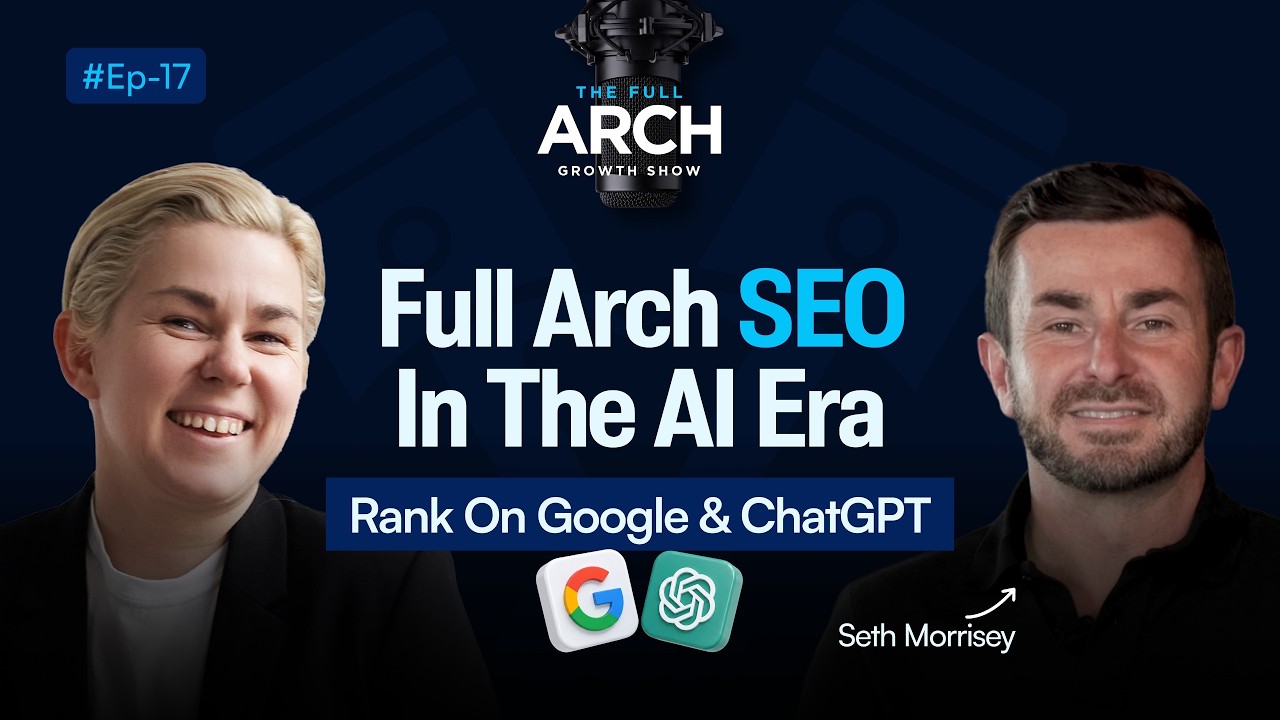

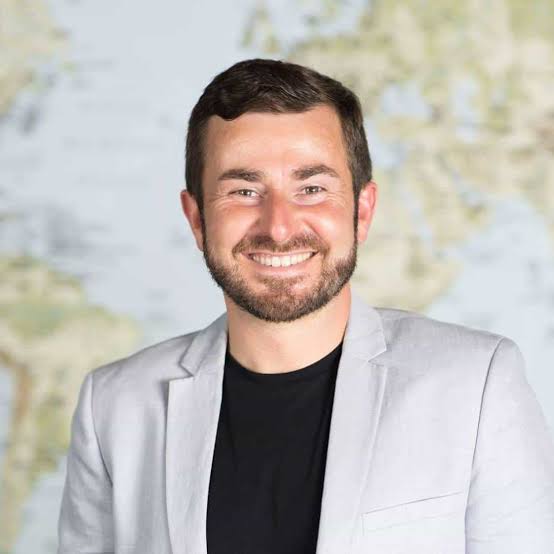
Guest: Seth Morrisey
Master SEO and AI strategies to grow your full-arch practice.



Most full-arch practices treat SEO as the thing you do when you can’t afford ads. Seth Morrisey has spent fifteen years proving that backwards.
In this episode Chelsea Morrisey sits down with Seth Morrisey, who runs search for The Implant Engine’s client base, to talk about where organic search actually sits for a full-arch practice in 2026 — what still works, what agencies are still selling that does nothing, and what changes now that patients are asking AI models who the best implant provider near them is.
This one is practical. Seth covers where the clicks really go on a local search result, why your website is a conversion tool rather than a ranking tool, what Google’s standards for medical content mean for the blog posts sitting on your site right now, and the one piece of the job no agency can do for you.
Seth Morrisey reveals how full-arch practices can dominate Google and AI search, covering local SEO, patient behavior, AI citations, effective content, website conversion, and why outdated $500-a-month SEO strategies fail.
00:00 Introduction and the Future of AI Search
00:37 Introduction to Seth Morrisey and the Conversation
Seth, thank you for joining us. I’m really excited about this conversation. You are my brother, so I’m probably a little bit biased, but I think you’re probably one of the smartest, most gifted people at SEO and SEO strategy on the planet. I’ve seen you develop these skills over maybe even more than fifteen years and you’ve never wavered from your dedication to the idea that search engine optimization is incredibly important for local business, despite ads becoming very trendy. Right. And now you do SEO for a number of full arch offices with The Implant Engine and we’ve seen incredible results.
So I wanted to have you on the podcast to kind of talk about SEO, its current state, its future state, where you see search going with the introduction of LLMs and everything in between. Let’s start with what is the current state of search engine optimization right now for Full Arch practices in Google?
Seth Morrisey
Yeah, first off, thanks for having me on the podcast. It’s a pleasure. I would say the more things change with the SEO, the more things stay the same. So there’s always this perception that it’s gonna go away. But if you really look at it, most people when they’re looking for something, they’re gonna search in Google for it. Now, they could also search in the different language models like Chat GPT, but they’re gonna search.
And in a lot of cases, if we can connect that practice with that person that’s searching for let’s say Dental implants near me, that’s going to be a very ROI positive event for that practice. So I think getting a practice ranked in Google near the top is going to be one of the best things that they can do from a marketing standpoint.
And so I really, you know, the current state of SEO, if I had to kind of pull back and look, I would say that it’s more important than ever. And that’s not to say ads aren’t important and you know, even offline marketing is important. But what we found is they all work synergistically.
So when someone is, you know, looking at one of your ads and they’re considering going with a specific practice, they might instead of convert right there, they might do a Google search and look at the practice on Google and see do they pop up number one, do they have great reviews, do they have that credibility? And then they actually convert.
So having both in place really just makes both perform better. And there’s this perception out there, and it’s definitely not true, but there’s a perception that if you’re ranked number one in Google, You’re the best full arch practice out there. Is that the case? Probably not, but the patient perceives that as true. So by getting a practice up to number one, we can really increase the profitability of that practice.
03:35 Why Google Ads Are Not a Replacement for SEO
And this is very common with full arch offices and dental practices that run Google Ads. They think it means they don’t have to do search engine optimization as well. And what are your thoughts on that, Seth?
Seth Morrisey
So I think Google ads have a lot of value and there’s definitely a place for them. But if you look at the actual click-through rate on these different searches that folks are making, in a lot of cases they will skip past the ads. And it’s for the same reason that I just pointed out earlier is they perceive that top organic result as being the best dental implant expert.
So by running an ad, I don’t think you’re necessarily gonna hurt yourself and you could get a return. I’d really watch your numbers and make sure that money is penciling out. But with that said, it’s no replacement for organic search, especially in that Google three pack, because everything’s there. You have the reviews, you have you know the website link, you have all the information about the practice right there.
So if we can get a practice in that Google three pack, the return on their investment is going to be very, very high, even above and beyond what they would have for a Google Ad campaign.
05:02 The Rank Everywhere Philosophy
Seth Morrisey
Yeah, absolutely. So we focus on the rank everywhere philosophy. And so Google search is obviously what most people talk about. And in fact, it does have the lion’s share, the market share if you look at the numbers. It’s still the biggest.
But we also have the AI language models. So the ChatGPTs, the Groks, the Clauds, where people are typing in terms like who is the best dental implant specialist near me. And so we want to make sure to position you number one in Google, but also in these different language models as well.
And now we also have, you know, the Bings and the Yahoo searches and things like that. But those are such a small percentage that if you really focus on Google and the language models, that’ll cover the water for us.
So I think it’s really more of a instead of just ranking Google, it’s a rank everywhere philosophy that the practices need to take.
05:56 The Google Three-Pack and Where the Clicks Go
Seth Morrisey
Yeah, absolutely. So at the top, you’re gonna have ads, you’re gonna have, you know, your local ads, and then you’re gonna have just your standard Google ads. Below that, you’re gonna have the Google three pack.
And this is without a doubt the most important place a practice can show up because that’s just where the most clicks go, especially from a local search standpoint. You know, if someone’s searching in a vicinity near your practice, that’s what they’re gonna see first.
And so we wanna get practices ranked in that three-pack. And if you’re looking at the Google search results, what you’ll notice is you have the three-pack and then you have the little more places button. But very rarely do people click on that more places.
I mean, it’s probably 20% of people go to that more places, and about 80% go to those top three. So really the top three are taking 80% of the market share, and everything that opens up when you click on more places, all those, you know, 20, 30, 50 different practices, depending on the size of the city, split the 20%.
We really want to be in that Google three pack. And then below that we have the website rankings. Now, the website rankings I think are important to a certain degree, but really the order of operations for a potential patient is going to be to engage with that Google three pack first.
And then they’re actually going to click to the website from that Google listing. So really the name of the game is to get in that three pack. And I still try to rank sites at the top as far as you can get up in the website rankings, but really the big ROIs are gonna come for being in that three pack and then the website’s gonna be secondary.
07:27 What a Patient Does at 11 PM Before They Ever Call You
Seth Morrisey
Yeah, well, potentially they could have been stimulated by one of your ads at first, right? So they’re, you know, Facebook has decided that they’re looking for a single implant, a full arch implant, you name it.
And so maybe they see an ad and they skip it and they see another ad and they see another ad, and then they get further down in that buying journey. We’d call it further down in the funnel, more towards the bottom.
Then they’re gonna start getting to those more intent-based searches. And so they’re gonna start typing in maybe even a ChatGPT, who is the best dental implant specialist around me. You know, we want those practices to be referenced there.
But really when it comes down to actually converting in most cases, they’re just going to type in dental implant specialists near me, dental implants near me, dental implants plus their city. Usually that’s how people search. We don’t see many searches going for county or state. Usually they’re trying to find a provider near them.
And then at that point they’re going to start digging into those top three results. They’re going to look at the reviews. They’re gonna click to the website, they’re gonna bounce back, they’re gonna go to the next one, look at the reviews, click to the website, bounce back, and then finally make that buying decision.
So, from our perspective, the website comes into play more as a conversion tool than necessarily a search tool, because you’re not gonna just convert with a Google business profile and no website or you know a low-quality website.
Because they’re gonna have that first touch with the Google Pack, but then they’re gonna go to the website and check you out and make sure you look professional. Make sure you have the credentials. So we wanna have that total package in place to get the highest possible conversion rate.
09:03 The Website’s Role in the Patient Journey
I think that people visit the website in almost every area of the sales process and of the buying journey. They visit it before the consultation to decide if they want to book that consultation or keep that consultation.
We find that they visit it again or for the first time, sometimes after the consultation. If they haven’t clicked on ads, they’ll be visiting it from Google.
So having a website that is not only up to date but is dedicated to you looking like a Full Arch Pro in your area is incredibly important to help your conversions.
Seth Morrisey
Well, I think you’re right. And for this specifically, it’s important because this is a high ticket item, right? So if it if we were buying, you know, a coffee at a coffee shop, a Google business profile is going to be sufficient. But full arches could be 20 grand, 30 grand, 40 grand, 50 grand.
So people are going to do more due diligence. And so practice has got to know that you have to have all these pieces in place if you do want to scale up and hit that profitability because you have such a high ticket item.
10:13 Full Arch Is a Business, Not a Lead Source
I mean, really, full arch is a business. It’s a full business. And if you’re thinking about the business, you want to take a look at it holistically.
And that includes search, how you show up online and in search engines. It includes how you show up in your website. It includes your social channels. Fortunately, you know, we have services for all of these things, but I think that viewing it more as a holistic business is gonna save them money in the long run with failed marketing campaigns that were short-sighted.
Seth Morrisey
Yeah, and definitely that’s where they’re gonna take their practice to the next level because they’re not gonna get those onesie twosie arches, they’re gonna get consistent arch growth, and that’s what they’re really looking for.
One other thing I wanted to point out, kind of a distinction that I see a lot when we’re working with practices is if you live in a very dense metropolitan like New York City, right? You’re downtown Manhattan, right? You’re just gonna count on that Google business profile, your reputation, and you’re gonna service a smaller, maybe five miles. Every patient you ever need is gonna be right there.
But a lot of these practices we work with are in rural areas. So the Google Business Profile, what it does is it gets patients within a five to 10 mile range. But what if a lot of your patients will drive an hour, two hours? What if they’re in surrounding cities?
And so what we do is we develop a strategy where the Google Business Profile gets the local patients, but then we also have service pages that will get these outside areas, you know, neighboring cities, neighboring counties, where you wouldn’t be able to touch those if you didn’t have a complete strategy.
So I think that’s something a lot of marketing agencies miss that I think we do.
11:52 Targeting Rural Areas and Surrounding Markets
Obviously not everyone is driving an hour, but that’s relevant no matter whether you’re in a rural area or city that people will drive a bit further. So I think identifying which markets you want to target and having service pages for those is a really good idea.
Seth Morrisey
And I think that’s a distinction from maybe just general dentistry. So general dentistry might just serve a neighborhood, but when you’re getting into the arch game, you know, there’s a wider net that you’re casting.
12:36 What’s Dead in Dental SEO
Seth Morrisey
Well, how long do you have here? I would say the biggest thing I see is agencies slapping up blog content without really understanding what the purpose of it is or how to get that to actually serve the practice, right?
So I see people just using AI and just pumping out 20 blogs. But the biggest thing people have to know about the difference between a dental website, a full arch website, compared to just a general website is dentists are held to a very high standard because they’re in the medical niche, right?
And so they have to comply with things called YMYL, which is your money or your life, and EAT, E-E-A-T, experience, expertise, authoritativeness, and trust, right?
And so Google puts these health websites in their own category. And so when you go onto your dental website and you have your secretary just crank out, you know, 500-word blogs, just general blogs, the chance of that benefiting your practice in any way is basically zero because you’re putting out content that one is not unique to you. It’s probably not even verified as accurate.
But the biggest issue with that content is there’s no author that has credentials that’s publishing it. It’s just general. A lot of times it’ll just be written by nobody. There won’t even be an author bio, or it’ll be written by the marketing agency.
I’ve seen somewhere the marketing agency’s name is in there as the author. Well, from Google’s perspective, how can it know that content is legitimate and even the AI language models like ChatGPT if it’s not a credentialed author actually writing it?
So what we do is we go into dental sites and we actually get the doctor, the dentist, or someone that has the credentials to actually have an author bio on that content and publish it because that’s the only chance we have to get that content cited in the AI language models and in Google search.
And so I’d say that’s the biggest thing I see folks do that are actually hurting their ability to rank in Google is just cranking out content that isn’t really thought through, accurate, vetted, and credentialed.
14:47 Your Website Is a Conversion Tool, Not a Ranking Tool
Seth Morrisey
Yeah, that’s a great question. And really it is a conversion tool.
And what we do differently is really focus on the Google Business Profile because if you look at the journey of a potential patient, most of the time their first touch with your practice is gonna be that Google Business Profile.
They are not gonna skip past the Google Pack, all the ads Google has above it, and go down three quarters of the page and then find a website that’s in the third or fourth position and make that their first touch.
So our focus, especially when we first start with the practice, is let’s see how many different keywords we can rank them at the top of Google and the Google Pack. Then what we want to do is get them to take an action from that Google Pack and click on that website link.
Realistically, we’re not expecting the call right there. This is just a first touch. This is them to see that we’re credible. They’re going to then go to the website and that’s where we want to use this as a conversion tool.
So that’s kind of the way that we differ in we’re not going to get that website homepage to rank for, you know, dental implants and all these different keywords in most cases, we’re going to use that as a conversion tool.
Now, what we do do is we use internal pages to rank for different queries that maybe are higher in the funnel. So more general questions they have about different dental implant questions. That’s a good place to get that first touch on the website.
But when they’re ready to convert and they’re hitting those key intent-based keywords, we’re focusing on the Google Pack and then we’re using that website to convert them.
16:24 Building a High-Converting Dental Website
And I think what you seem to be saying is that’s an outdated way of creating websites, and it’s an outdated way of trying to rank in Google.
Seth Morrisey
Yeah, absolutely. I mean, there is some pushback, you know, with me and you when we create, you know, these what we call a high converting dental website, because really what we want on that homepage is we want all the key elements that are gonna make a patient feel comfortable enough to take that next step, right?
So testimonials, you know, patient case studies, doctor bios, all those things, before and after photos so they feel comfortable converting.
Now there is a certain level of SEO work that we need to do on that thing to make it rank well, especially for the brand. You know, I want page to rank for the brand well and so I do have a little bit of pushback.
But when you build a site my recommendation to you is build this thing to convert at the highest possible rate because the Google Business Profile is going to do the heavy lifting.
17:28 Build It for Humans
And if we’re answering what do you do, the second question is, why you? You know, if you do All-On-X, why you versus everyone else?
Some stuff that we like to do on home pages, we like to do comparison charts, obviously testimonial. We like to make sure that we have a process, a particular SMILE protocol that they that we coin with them so customers understand that they have a particular process that they do every time for their All-On-X.
So these are some things that help them to understand why you and not the office up the street, but also it helps to instill trust and belief that this is something you do very regularly.
And you don’t have to be only an implant center to have this type of website. I mean, we obviously you can feature your GP work as well, but it’s important if you’re trying to sell full arch cases that when they land on the homepage, they feel as though you do these regularly. You’re an expert and you have a dialed in process.
Seth Morrisey
Yeah, and another thing we talk about a lot when we do consultations is the perception of the website when the patient gets to it should be the same experience that they get when they walk to that practice.
So if they walk into practice and it’s dirty, there’s holes in the couches, you know, there’s cobwebs in the ceiling, the staff is unprofessional, they’re probably not gonna get a full arch there. And so why would that be different than the website?
When they go to a website, it’s dated, it doesn’t have the proper information, aesthetically it’s not looking nice. I mean, that is gonna absolutely kill more sales than you could possibly know.
So if we want to have a really professional practice here, everything needs to be professional from the website, the first touch, all the way through to the actual experience with the treatment.
So we try to have the complete package for practices so they can really scale up and really grow.
19:24 What AI Search Changes for Full Arch Practices
Seth Morrisey
Yeah, I think it’s huge. So like I said earlier, Google search is the lion’s share of the market share. But what we see is every single month, these AI language models are taking a little bit out of that market share.
And I don’t think Google’s going away, especially because they have the Google Pack and no other platform out there has been able to represent, you know, all local businesses in such a good way that Google has and such a good platform.
So I don’t think they’re ever going away, but these AI language models are getting bigger.
So if you’re a practice out there that isn’t actively trying to rank in the language models, you’re really gonna be left behind in the future because more and more of that growth that you could potentially have is gonna go to these language model queries.
And we want to get you up there when folks, you know, type in terms like who is the best dental implant specialist.
So you know, that’s a long process to actually make that happen. But that should be the goal for these practices. How do I get my practice in there now before, you know, this is taken over and it’s too late?
So now is the time to get in there and start getting your rankings.
Chelsea Morrisey
We’ve talked about how people rank in Google, but high level, how do people rank in language models?
20:36 How to Rank in Language Models
They’re behind the scenes, the way that you actually rank in these different language models is not something they’re gonna tell you, right? So there’s a lot of trial and error, there’s a lot of testing, and that’s one of the benefits of us having so many dental practices and been doing this for so long is we have that data, we have that testing.
But I would say number one, strong technical SEO. So technically, your site needs to be sound. We call that on-site SEO. That’s huge. And that is gonna be one of the biggest pieces.
Number two is you can’t fake it. You need genuinely actually high quality content. So don’t copy and paste content from other people. Don’t just throw up AI content. Really put high quality content on your site that’s actually gonna make these language models cite you. I mean, they’re not gonna cite poor quality content. Obviously, they’re smart and they know.
So that’s number two.
I would say number three is what I talked about earlier, that YMYL compliance. So you’re a medical site. You’re held to a very high standard by Google, but also these language models.
And if they’re gonna stick their neck out there and cite you as a source, why are they gonna do that? It’s because someone with credentials and education certifications is saying something.
And so if you’re just slapping up blog content, the chance of you getting cited very low. I wouldn’t say zero, but it’s very close.
And then I would say, you know, this is something I think people over everyone thinks of social media as I’m gonna go out on Instagram and Facebook and I’m gonna post organically and get patients. That’s not how I look at it.
I look at your practice and your online presence as an entity. So it’s establishing an entity that has more than just a website and a Google Business Profile, but you have a social network that’s all around you. You have citations, you have business directories.
And so if you establish this big entity, which is what we do for dentists, then that’s going to raise the trust in your overall brand and practice. And then you have a lot higher chance of actually getting cited.
22:32 What Content Matters for AI Search
Seth Morrisey
I like just answering questions the patients would have. So facts, really well written facts.
Instead of having your secretary answer the same question every day, why not put that on the website in a very organized fashion? So compile all the questions you’re gonna get and put that on your site, you know, in a basically a fact accordion, we call it, where people can find the question, click, get the answer.
And that’s gonna not only save your staff a ton of time, but it’s gonna give the language models what they’re looking for.
23:19 The Pricing Tip Most Practices Refuse to Use
But one of the biggest queries around dental implants is how much do they cost? But very rarely does a practice want to publish pricing.
So the practice, and we’ve seen this in our case studies, the practices that will publish pricing, even if it’s a range, will get cited far above the ones that won’t.
Because that is one of the main questions people have when they look at a dental implant. So I would encourage practices, publish your pricing. If you’re not comfortable doing that, publish a range and that’ll help you get cited.
Chelsea Morrisey
Yeah, very good advice. What do you think that people can do today to start improving their rankings that’s really simple? Sounds like publishing pricing is a good start on their implant pages. Any other kind of quick tips of anything that might have even a small impact?
24:05 The One Thing Your Agency Cannot Do for You
And this is a very hard thing to execute, but it’s one of the most important things you’re going to need to execute because an agency like us cannot do that for you, right? We don’t, we can’t come in and get you those five-star reviews.
It’s really one of the only pieces that we have to defer to the client.
And so I would say have that system in place where every single patient that comes through that door, that you know has a good experience, is asked for a review on your Google Business Profile. That’s I think that’s gonna be number one.
The other one is get a new website. I mean, really, if your website isn’t beautiful and converting, where would be a better place to put your money, right?
If you’re really trying to grow this practice, you’re really trying to sell $30,000, $40,000 arches, having that website is gonna be your best 24-hour sales tool.
Chelsea Morrisey
I mean, yeah, we do websites for fifteen thousand, sometimes up to twenty thousand depending on the complexity. And doctors are thinking, that’s a lot of money. I’m like, that’s the profit of one case.
And if you really put that into perspective, that’s the profit of one case. So it’s like, I mean, the benefit to having a full arch driven website if your commitment is to do, you know, five, ten, twenty cases, it’s a drop in the bucket at that point.
So I do think what could be more important than making sure that your house is in order before you launch thousands of dollars in marketing spend.
Seth Morrisey
Well, I see that apprehension too. I mean, they might spend two to five million on a building and the furniture and the technology for their dental practice, but don’t want to put in 15, 20 grand for the website that’s gonna drive the patients to that practice, you know, seven days a week.
So I think that’s a great place to invest your money first, even before you start running ads, or even maybe before you start doing SEO, because that’s really that foundational piece that’s gonna make it.
26:05 Why Low-Cost SEO Doesn’t Work
What a lot of folks believe is that SEO doesn’t work. They’ve been with these companies that charge them $500, $800 a month, and they think SEO doesn’t work. What’s actually going on behind the scenes? Because we know SEO does work, but what are these companies actually giving them for $500, $800 that they’re taking their money for? Like what’s happening there?
Seth Morrisey
Yeah, I’ve been in this industry almost fifteen years now. And I get this question all the time. And I think the biggest thing, it’s not that SEO doesn’t work. It’s that when you pay five hundred to eight hundred dollars a month for SEO, the agency isn’t doing it.
So really what you’re getting is you’re getting fancy reporting. You might get what we call on-site, where they come in month one, they might tweak some stuff, but they’re not actually doing what we would consider SEO.
And you’ve seen how many audits I’ve done for. That’s across the board. And there’s very few agencies out there that are actually really doing the hard work of SEO because there’s low margins in it and it’s a lot of work. It’s a pain.
But that’s really the difference is you need to probably pay more than you want to get the results that you need.
And so those low, low balling SEO prices, I always tell folks take that money, throw it into ads, you’re not going to get anything out.
27:33 What Goes Into Real SEO
Seth Morrisey
Well, first off, I’d say they probably don’t actually know how to do it in a lot of cases properly, because you only really understand this when you spend a lot of time in the industry.
But I would say number one, what the labor is going into is maybe some of the on-site changes, you know, title, meta description, things like that.
Where the costs come in is getting featured in different publications, different dental publications, article features, content placement, press release syndication. Things like that that you can’t do for free.
And you can do a lot of things for labor, but you can’t do it all for labor. And really when we see the supercharge results from an SEO standpoint, it’s when the agency does both.
So it’s the on-site, but it’s also all the things that happen off-site. And that’s what I think a lot of the agencies out there that are offering SEO are missing. And hopefully they don’t listen to this.
28:33 SEO Metrics and How Long Results Take
Seth Morrisey
Yeah, that’s good question. So I think you really have to think of timelines and metrics, really two different things.
So you have the Google Business Profile, which we can get results with folks in their Google Business Profile in under 30 days, sometimes within a week. Now, that’s not going to be always the case, but in a lot of cases, we can very quickly get movement. And that’s just the way Google algorithm works, right?
So Google has a certain algorithm and The Google Business Profile is on its own algorithm. But then you have the website rankings. And this is where results take a long time.
So if you come into an agency and you give them three months and you’re wondering why your website’s not at number one in Google, well, that’s not the agency’s fault. It’s Google will move very slowly with certain queries because it has the best search results in the world and it does not change them quickly.
And it definitely doesn’t want you to know how to game the system to change them.
So Google Business Profile is quick. Website is very slow. And we give folks timelines of six to 12 months now. And sometimes it’ll be in six. Sometimes we’ll see it in 14 months. And that’s just the reality of Google’s algorithm.
So I would definitely watch for quick changes in your Google Business Profile. That should happen quick. Your ranking should improve. But on the website side, you need to give the agencies time to do their work.
And if they know what they’re doing, the benefit of that is you’re going to be set up for long-term success.
And it’s very different than ads in the sense that you don’t have to keep paying, right? So with ads, you’re gonna run those ads probably forever for a lot of practices because they’re gonna just keep getting a return on their ad investment.
But with SEO, once you get those results and you’re happy with where you’re at, in a lot of cases you can back off on that investment and keep the results.
So think of it as an upfront investment that’s gonna pay in the long run, but you gotta really differentiate between the two.
30:32 The Value of Organic Search
And businesses are in a really difficult position when they’ve invested nothing in organic search and the cost of advertising is rising and rising, which it always does, you know, in any area. It’s always gonna rise.
And you don’t have any organic traffic coming in. So I do think a small expense on the front end to boost your organic is incredibly smart for any kind of business owner.
One thing that I think is really interesting is let’s just talk about the Implant Engine’s advertising for a second. You know, we spend quite a bit of money every month on our advertising.
I know having done paid ads for well over a decade now, that everything is connected. And attribution is very slippery and tricky thing, right?
Most people are looking at a last click attribution, which is to say that they’re looking at, you know, the last point the customer made before they turned into a booked appointment or a patient or a sale or whatever, right?
What I know to be true is that the customer journey is quite a bit more complex than that. We don’t buy in a linear way.
Like you said, we’ll look at an ad, we’ll be at a traffic light, put down our phone, can’t take action on that right now. That’s I’m on YouTube, I see another ad. Now is a good time. I’m gonna search.
I’m on my phone. That doesn’t feel comfortable. I’m gonna do on my desktop tomorrow. Then they’ll go to their desktop and maybe they’re in AI doing some research.
I mean, customers are all over the place. And for full arch, I mean, they’ll research for years before they actually move forward with treatment.
So all of this to say, if you look at our advertising, I dropped our Facebook budget by 50%. It’s a sizable budget. Guess what went down by 60%? Organic and Google Ads results went down by 60%.
And I did a two-week test in a direct correlation. But that business wasn’t attributed to Facebook.
So if you’re really short-sighted and if you’re running a single platform, you’re sincerely missing out on major opportunity because people have to see you everywhere to finally break them down and kind of get them to buy.
What we know is people are watching our Facebook ads and then they’re probably Googling. Sometimes they’re hitting the Google ads and sometimes they’re hitting organic.
Sometimes they’re not starting on Facebook, right? Sometimes they are starting on Google or organic. But for us to drop Meta and then see that decrease by 60%, it’s obvious. I mean it’s obvious what’s happening.
33:02 Why Multi-Channel Marketing Matters
And someone sees their Facebook ad and they’re like, I want to check in on this practice and they go and search dental implant specialists in their city and they’re nowhere to be found. Right.
And so then even though they got that touch with that Facebook ad, they didn’t actually close a patient.
Chelsea Morrisey
They lost the sale to someone else because they had no presence in Google. These companies that run Meta only. It’s an absolute disaster for a full arch practice because, like I said with my little example there, Meta is oftentimes just the gateway drug to them looking deeper into this.
And you have to have a strong presence on Google, those both Google Ads and Google search. Otherwise, you’re basically paying to give somebody else your ad dollars to give somebody else your patient.
Seth Morrisey
Yeah, you’re stimulating demand for someone else.
The other piece that I think practices should know is that if you are just running Facebook ads and we hope you run forever with us, but let’s say that’s all you’ve ever invested in and that’s your only marketing channel, the second you stop running those ads, you’re gonna have crickets at your practice, right?
And even worse than that, if you ever want to sell your practice, there’s really nothing there to sell, right?
But if you have that online presence, that solid online presence, the entire marketing campaign put in place, then there’s actually something that someone could come into and step into and be successful going forward.
So yeah, we’re huge advocates of having that synergistic advertise everywhere in a way that really gets patients coming from multiple different channels at the same time.
34:46 Stop Chasing the Silver Bullet
And start looking at your full arch business really holistically and thinking about as if you were the customer, thinking about their experience of how they choose to pick a provider.
And if you act like the customer, you search your own practice, you go to your website, you see where you’re at, you look at your Facebook ads, you really look at that entire thing holistically, I think you’d probably be pretty honest with yourself about some of your shortcomings.
And it’s like I think that the doctors that are gonna win in the next year are the ones that do promote full arch in an holistic way and they have that omnipresence.
One last thing I’ll say about the omnipresence is what we’ve seen, and this is just I don’t have any data to back this up. This is just a hot tip.
Full Arch doctors that produce content with us or with someone else and fill their YouTube up with good quality full arch content, YouTube specifically, they start ranking in LLMs.
And we, The Implant Engine, started publishing YouTube content. And we immediately started getting more hits from ChatGPT.
And we hadn’t changed our website yet. We still haven’t. We’re about to publish it. The only thing we did was start publishing Instagram, YouTube content, primarily YouTube.
36:18 Why YouTube Matters for AI Citations
YouTube is different than Instagram and Facebook in the sense YouTube is owned by Google. And so everything that happens there is given, I’d say, a little boost.
And it also has the ability to add links and be indexable. In a lot of cases, you know, your Facebook post is not going to index in Google or the AI language models, and neither is your Instagram post, but your YouTube video will.
So I think YouTube is something that more practices should definitely focus on. And you can make one piece of content and publish it in multiple platforms. It doesn’t have to be a specific YouTube piece of content.
But I think a lot of people are sleeping on YouTube and it is an asset, especially from an SEO and AI language model citation standpoint, that you can definitely use.
37:02 Creating a Year of Content
So it’s actually easy to create really good full arch content these days. It’s easy to get it posted and published.
We even help doctors fill up their YouTube because it’s so important for ranking in sites like ChatGPT, Google, that sort of thing.
So I do think that going into 2027, doctors need to really be thinking about their online presence a bit more and how they show up from a customer-facing standpoint.
Is there any final parting words that you have for folks that are listening to this that you want them to take away?
Seth Morrisey
I have a list. I have five points that I want to give, kind of the takeaways of what a practice should do first. If they’re listening to this, they want to grow, they want some solid tips. Here’s my five.
37:41 Seth’s Five Things to Do First
I would even Google search your city plus your service and see where your competitors are at and make that your benchmark to get up to them.
Number two, if you are going to go with an SEO agency, whether it’s us or whether it’s anyone else, then give them six to twelve months to work, right? So give it the time to kick in.
If you don’t have that budget to invest, take that money, put it somewhere else. Put it into ads, put it into offline marketing, but give it six to twelve months.
I would say number three is going to be build that entity. So we talked about social media isn’t just to get patients, it’s to build that entity around your brand so you can get those AI citations.
So set up your Facebook, set up your Instagram, set up your YouTube channel. Even if you don’t post a lot, get those set up around your brand.
Number four, publish credentialed content. So if you’re gonna publish blog posts, make sure it’s reviewed, approved, or written by the dentist.
And number five, structure your content so AI models can actually search it, find it, facts, all the things we talked about so you can set yourself up for the next wave of search.
Chelsea Morrisey
Yeah, wonderful. That was incredible advice. Thank you so much for your time. I appreciate you coming on. I will talk to you real soon.
Seth Morrisey
All right, thank you, Seth.
39:05 Closing
Every month you wait, patients who should have been yours are choosing someone else. Not because they’re better doctors — because they built the system.