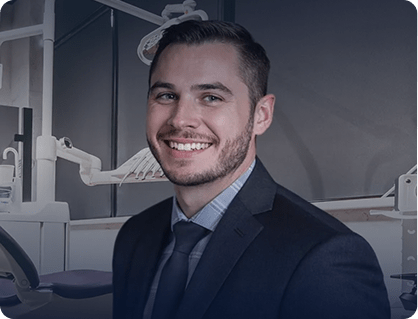


Guest: Dr. Spencer Ross
Thomaston Family Dentistry, Rural Maine



Dr. Spencer Ross is a solo general dentist in rural Maine who placed his first implant as a dental school sophomore and has since turned a GP practice he bought during COVID into a full-arch implant center doing cases at least once a week. In 11 months of advertising with The Implant Engine, he generated $633,000 in full-arch revenue on $52,000 in ad spend — a 12x return — while still running a full GP schedule. In this conversation, Dr. Ross breaks down exactly how he made room for full arch inside a busy general practice, why he believes most GPs are underestimating both the opportunity and the risk in this space, and what the advertising and lead-management process actually looks like from the inside.
IN THIS EPISODE
In this episode, a solo general practitioner shares how they generated $633K in full-arch revenue in just 11 months. Discover the exact strategies, clinical transition steps, and patient conversion frameworks used to scale a solo practice into a high-volume full-arch powerhouse.
00:00 From a Rural Maine GP to Full Arch
Chelsea Morrisey
Dr. Ross, let’s just start a little bit with your background. You’re obviously a young guy and you’ve built something really exceptional, which is why I wanted to bring you on and hear a little bit more about it. So tell me a little bit about your background and when you purchased the practice and how that kind of all went.
Spencer Ross
Yeah, sure. So yeah, I graduated from the University of New England. So from the start I definitely had a little bit more experience in the field of implantology than most first-year graduates would because we were a new school. I was the third class to graduate from the University of New England Dental School. Because of that, we had no post-doctoral program. So there were no dental graduates that were going to be oral surgeons or periodontists or anything like that for any type of specialties. So we got to handle all of those cases. So I placed my first implant when I was a sophomore in dental school, which is pretty much unheard of. That’s when most people are just starting to touch a handpiece, let alone place implants.
When I graduated, I actually started working in public health about an hour and a half north from where we live now. And I was on the coast. To be honest, the field of implantology was kind of on a back burner because the patients I was seeing, we were doing multiple extractions a day. I felt like a pediatric dentist as well because we were seeing a lot of kids. Being a nonprofit office, if they didn’t get treatment with us, then they weren’t getting treatment at all.
So, fast forward a year working there, I was seeing all of my patients. I was also teaching our fourth-year dental students at the same time. I’d be seeing their patients, seeing my patients, and honestly my first year I started getting a little bit burnt out because of the sheer volume of patients that I was seeing. And then COVID happened and all offices got shut down. That’s when my opportunity to buy a practice turned up.
Spencer Ross
The doctor that was selling the practice owned a practice and his wife actually owned another dental practice in the area as well. My older brother’s a dentist, and the two of us came in. He bought her practice and I bought my practice, and we’re about 15 or 20 minutes away from each other.
So that’s when I got back into the field of implantology. Starting out at the office, I was obviously just doing restorations. The office that I had bought, he was referring all patients down to southern Maine, which is about an hour and a half, two-hour drive for a lot of patients to have extractions done or implants and a lot of back and forth for those procedures.
That’s when I really started taking more courses in the field of implantology. I took what’s called the Maxi Course, which I think the statistic is like 1% of dentists have taken it. It’s 300 credit hours. You end up going down to Boston for five days every month. It was a pretty big commitment. I obviously can’t see patients during those days that I’m down there, but that’s where I developed the basis of everything that I’ve gone forward with in the field. It was with Dr. Brian Jackson. He was actually the president of the American Implant Association at the time that he was teaching us. Awesome guy. Couldn’t recommend learning from him anymore.
So I took that course and towards the end of it I felt comfortable to start placing implants in my practice. I can still remember my first implant patient that I had placed out of school. Every time that I come in, she’s blown away. She likes to keep up with the cases that I’ve been doing since the single implant that I placed on her probably four or five years ago. She’s blown away by now that we’ve jumped into the full arch cases.
After I took that Maxi Course and started placing implants, I got more involved in the field and I’ve flown all over the country from California, Arizona, Florida. I’ve taken a class in Portugal for a hands-on course and kind of just dove straight in.
So now, like you alluded to, I’m a general dentist. I do fillings every day. I do crown and bridge. I do extractions. I have my hygiene checks that I need to do for my hygienist every day. But now we are doing a full arch case once a week at least, at least a couple times a month.
Starting out, it was patients in my practice that had been in the practice for a while, that I recognized needed a service like this, but they didn’t want to travel down to Portland and do this. And there weren’t really a whole lot of offices that were offering hybrid or full arch surgeries. And if they were, they got to go to a specialist and have implants placed and then they bounce back to their GP to get the restoration and have to go back to their surgeon for checkups. For my patients, that was traveling an hour and a half, two hours down to southern Maine.
My first handful of cases that I did in the office were patients that had been at the office for years, but didn’t have this option available to them.
Spencer Ross
In the meantime, all of these classes that I take, I take with my older brother. So, for lack of a better word, he’s a competing office in the area. I had noticed that he was definitely doing an influx of these full arch cases. And then I started having my staff come in and be like, “You see your brother is advertising and doing this and doing that.”
So, I owe him a lot. Being my older brother, he’s gotten me to take some of these classes and stuff, come out, jump out of my comfort zone. But once I heard that he was advertising a little bit, I was like, “All right, he’s helped me enough with everything. Now I need to step out and figure out my own way to start advertising.” And so, after doing a little bit of research, that’s when I ended up coming upon you guys.
And right after our first interview, I don’t think I hesitated. I was like, “All right, let’s get going.”
07:24 $633K in 11 Months
Chelsea Morrisey
Which represents about a 12x return on ad spend. When you see those numbers, what does that actually mean for your practice day-to-day for folks that might be listening to this wondering, can I do this? Can I start advertising for full arch? What does it look like? Because a lot of people are really busy in their GP office. Can I start doing that? What does that look like in your day-to-day, those kind of numbers?
Spencer Ross
There’s certainly a lot more commitment when you’re jumping in and doing that sheer volume in 11 months. That’s on top of, like I said, I’m a general dentist. I have a lot of patients that I take care of, and obviously the majority is not full arch. So, you need to kind of weigh different situations.
I learned very quick off the bat that I needed to start blocking off half a day of the schedule, which gets a little tough with being a general dentist. I have somebody come in and break a tooth and I’m like, “Okay, you need a crown. I can see you in two months or so.” But then back of my brain, I’m like, “Oh, I have these slots that are blocked off for full arch.”
But that’s a commitment because these other patients that are coming in and their needs are, I don’t want to say more important or surpass a broken tooth or something like that, but a lot of these patients have been searching for help for a while, especially in my area, and just don’t really know about these options of full arch implants.
So, I certainly had to weigh the different situations. But I’ve found it very beneficial to block off half a day once a week. And whether we’re filling that with a hybrid case or I have several other patients with broken teeth or something that we’re able to bring in sooner and fill those slots within a day or so.
It’s definitely doable for any GP, but there’s a big commitment between the amount of reviewing cases, planning these cases, keeping up with my end of updating things on your guys’ website, The Implant Engine, which is an awesome resource and is very user friendly.
When I bought my office, that revenue that we’ve generated just by working with you guys, we were only doing a little bit better than that total. So to be able to boost that amount of revenue is huge. I’m a young doctor still out of school. It’s an expensive world that we live in. Investing in the equipment that we have to do these cases is substantial. But it’s been totally worth it.
10:15 The Life-Changing Impact of Full Arch
The day after we did his surgery and got his teeth in there, he started a diet. He started eating healthy. He started working out. He looks like a completely different person. And that was just by putting teeth. You’d think that once we got teeth in there, he might even put on some weight because he’s got something to chew with and stuff, but he decided right from the get-go, he’s bettering his life and started doing it all around.
So, it’s pretty amazing what these cases do. It’s cool. You can see in their pictures, too, before pictures and then, it’s not just a bigger smile, their entire complexion changes. They look 10 years younger. I mean, sometimes easily 20. It’s unrecognizable that it’s even the same person. And I think it’s not just the smile, it’s the energy change of the individual. Their energy changes on their face and in their body language.
Chelsea Morrisey
Yeah.
Spencer Ross
So, it’s become an addiction, you know, just by the sheer feeling of helping somebody like that.
11:34 Why Dentistry Was Always the Goal
So, he’s still practicing too in our rural hometown in Rumford, Maine. He doesn’t do any of this implant stuff at all. So, he’s blown away by what we’re doing.
Chelsea Morrisey
What does he think about it?
Spencer Ross
I think sometimes he’s still in a little bit of awe and kind of shock that we’re doing these things, but he obviously recognizes the amount of time. I mean, I fly out of state at least every other month probably. Well, that was a couple years ago. We took a little break this past year and I’ve been focusing on bringing in cases and stuff and sticking around.
I think that my education has been pretty thorough, but again, I’m flying out next month to take another course down in Miami. It’s been great. You make a lot of connections at these classes and I’ve trained with some of the top surgeons in the country. These guys are awesome resources to have. I’m blown away at the cases that they do. So, it’s a nice resource to have. Any little case you have questions about, I’m able to bounce off from these guys. It makes you feel a lot more comfortable the more you know, obviously.
13:20 The Importance of Learning From Peers
Spencer Ross
Definitely. It’s nice to connect with somebody on that level and somebody that has a complete understanding of what you’re going through. That’s why I talk to my older brother every single day after work. We do the same exact stuff in our offices.
Dentistry is an awesome career and I absolutely love it. It’s my passion, but it takes a toll on you for sure. We’re working in a small environment all day every day. A half a millimeter is our limit. Whether something is good or bad, that’s like a hair’s width sometimes.
So, it definitely takes a toll on you, especially. That’s why I enjoy bouncing around and doing different things as a general dentist. It keeps things interesting and, like I said, these cases have been extremely rewarding.
14:03 Making Full Arch Part of the Regular Schedule
And then once we got into a rhythm with it, we’re like, “All right, let’s just start putting these in the regular schedule. We can do a half day and we have no problem.”
Chelsea Morrisey
Yeah.
Spencer Ross
But that’s, like I said, with quite a bit of an investment into the equipment that we needed so that we can give people teeth in a day. They come in in the morning and leave in the afternoon with a full arch of teeth. So, it’s pretty amazing.
14:50 Building the Right Team
Spencer Ross
No, the two assistants I have now were not with the office. I hired one of them actually a month or two months after I bought the office and it was for no reason about implants or anything. I still wasn’t placing implants at that time. She’s a rock. I rely on her for a lot. So it was very easy to train her in everything that we do.
I’ve bounced around with three or four different types of implant brands and stuff. Every implant has a different kit. So then I’ve been like, “All right, Tammy. Well, we’re learning a new one now.” And she’s been wonderful with that.
My newer assistant I actually just hired this past August. She was a dental assistant like 25 years ago and she trained my assistant that I have now back then. Then she got out of the field to raise her kids and got into teaching, and then came full circle and I hired her at the office. So she had zero background in implantology at all.
I’ve just kind of trained them. It’s very doable. And for no judgment at all, they’re not necessarily younger assistants. They’re both in their early 50s, and they’ve picked up on everything, no problem at all.
I do a full digital workflow for these cases, too. We’re full arch scanning. I do photogrammetry with a Micron Mapper. They watch me do some of it and I’m sure they’re like, “Yeah, he’s definitely the one that’s gonna handle that and I’m not sure exactly what’s going on.” But they’ve picked up on everything and I wouldn’t be able to do what I’ve been doing without them. That’s for sure.
17:00 Getting a 35-Year Team to Embrace Change
Spencer Ross
Yeah, we definitely had to change things a bit. My hygienists have been at my office for two of them have been there for 34, 35 years. I’m only 33 years old, so that’s longer than I’ve been alive.
They’re connected with their patients. Some of them are some of their very good friends. They see them twice a year and they catch up. Sometimes we joke and we’re like, “Geez, is there a cleaning going on down there or are they just talking about life?” That’s because of the connections they’ve built.
When I started out, it was heavily relying on them feeling confident with me and talking to these patients. Somebody comes in with a broken tooth and they used to be referred to a specialist and that specialist would extract it and do the implant.
Most of my patients say, “Geez, are you out of high school? Why is this younger patient or this younger dentist going to be the one extracting my tooth and he’s going to do the implant, too?”
So, it definitely took some time. I didn’t necessarily have to convince my team. They knew all the classes that I’ve been taking and everything. I’m a well-rounded person. I wouldn’t jump into something if I didn’t feel confident doing it, but I had to rely on them.
I would obviously present things to a patient, but some of these patients, like I said, I’ve been seeing them for 30 years. And so, in the end, I step out of the room, they’re going to look at the hygienist and say, “What about going back down to Portland?”
That definitely had to change a little bit, which honestly worked out really well. I don’t think I really had any issues. There were a couple patients that had three implants with the specialist in Portland and they felt comfortable with them. I never would question or push anything about that, because God forbid, it is a surgery in the end and there’s any type of complication that could arise.
But most of them had no issues. They’re like, “Oh, I don’t have to go to Portland. Are you serious?” So, it’s worked out really well.
I joke with my older brother that I feel like most of my patients are 65 plus. I have an older practice for sure. But we have a lot of younger patients too.
A lot of my patients don’t like to travel like that. Of course, a two-hour drive is a long drive. Plus, we’re in Maine and a lot of people really don’t travel a whole lot. We’re comfortable in the beautiful place that we live and don’t feel the need to travel.
So, I think the benefit of me not having a specialist in the area at all helped out quite a bit.
20:07 Why Rural Full Arch Can Work
Spencer Ross
I was born and raised in a rural area. I feel like a lot of these patients feel a little bit more of a connection with me when we’re talking and stuff.
A lot of it is connecting with your patient to seal some of these cases. You got to make them feel comfortable with the person that you are. This is a huge thing that they’re investing. It’s not just, “This is $20,000, $40,000. This is what I’m going to do. See you later.”
We try to connect with our patients. What are you doing for work? How are your kids doing? Simple questions that a lot of patients or a lot of docs don’t take the time to do. And that’s what I really enjoyed about when I did transition from that nonprofit office where I was just nonstop on the go.
I’ve really enjoyed making connections with my patients. And that’s the beauty of being in a rural area and a private practice, being your own boss.
Chelsea Morrisey
Yeah.
Spencer Ross
Sometimes I have my assistants standing in the corner and being like, “Come on, you got somebody next door.” But I’m standing there talking with this patient about hunting or where they’re going this summer.
Like I said, building those relationships, having those small conversations with patients, you make them feel important. They’re the only ones sitting there in the room. You understand what they’re going through. You’ve been through it with several other patients and what the end result can be for them.
Like I said, it becomes addicting almost.
21:44 The Hardest Part: Finding the Time
Spencer Ross
Making the time for these cases. Being a solo GP, when I bought the office, we were booking out like two and a half, three weeks. Last year before I started advertising with you guys, I was probably booking out four to five weeks.
I’ve just gotten busy between some of the consults that I have turned into. I don’t want to extract all your teeth. You definitely don’t need this, but I’d love to have you become a new patient. So then that turns into obviously another appointment with them.
Now a year or 11 months after advertising with you guys, I’m booking out like two and a half, three months, which is tough sometimes.
I work through every single lunch. Luckily, my assistants are really good with that. They rotate with me. Coming from that nonprofit office, I never had time for lunch, so that’s when I got in the routine of doing that.
And then when I started working with you guys, the only consult time that I could really allow was putting something in a lunchtime or putting something at the end of the day.
So, time management, I think, has been the hardest part for sure because, like you said, I’m a GP, but I’ve also turned this into a full arch practice. I’m trying to do both worlds.
22:58 Taking the Leap and Blocking the Schedule
And I think that initial thought for some GPs is like, how do I make the time for this? Or should I make the time for this? And should I take this risk in blocking my schedule for this thing that I don’t have yet? Is one of the reasons why they struggle to start full arch marketing. Did you, is that kind of what you were saying was a struggle for you, is just kind of blocking that time off for full arch and how has that paid off for you?
Spencer Ross
Like I said, it was definitely something I didn’t do to start because I wasn’t sure how this was going to go. When I first started out, we were only Monday to Thursday and so that’s when I put cases on Fridays.
Number one, I was newer to it. I had done a handful of cases before I started advertising with you guys, but I still just felt more comfortable doing them on a Friday. If there’s any issues with anything else, I’m not worried about hygiene checks or anything like that.
That was easy starting out, but once I realized that this advertising really works and we’re not going to be doing this in a four-hour time slot or something, we don’t need to come in on Fridays. That’s when I started taking that leap and blocking off those days.
I’m an extremely busy GP. So even if it only happened once, if we get to a day that was blocked off and it’s typically, we know by the beginning of the week if I’m going to be doing a full arch case or something like that. If it’s a Monday, we still have a Thursday blocked off, it’s pretty easy for me to fill that schedule.
I wasn’t as worried about that aspect. But you’re totally right, taking an entire half a day and just putting a block there and being like, “All right, I’m gonna book something else there, it should work out.”
And then seeing this emergency patient, and then another emergency patient and being like, “Yes, we need a crown. We’ll do it in a month and a half, two months.” It definitely gets a little stressful, but yes, the profitability of these cases certainly helps out quite a bit.
But most of these patients, like I said, are in a lot more of a need than somebody with just a broken tooth or something like that. If it was a true emergency and somebody’s in pain or something like that, trust me, I’d bend over backwards and jump through hoops to get somebody in. I wouldn’t be booking them out two months. But it’s worked out in my office so far.
25:41 Where Full Arch Is Heading
Spencer Ross
The full arch space is getting very busy with a lot of GPs that are jumping into it. There’s a guy that I’ve learned from a lot, Dr. Simon. He’s an amazing surgeon and he has this saying that he posts cases because all he does is revisions cases that have failed, and his saying is from Game of Thrones, “Winter is coming.”
There’s a lot that are jumping into this field and not having the background, not taking the training and just going for it without the right background, without knowing simple tips that just add up on top of each other. These cases fail.
And they a lot of them are catastrophic because to start you’re removing everybody’s teeth. You’re removing bone that’s viable and then you’re placing implants in the only bone that’s available. And then when those implants fail, where do you go next?
So, I think that the full arch space is going to turn into a lot of remote anchorage cases, which is what I’ve been doing a lot more of my training in.
These patients that have failed cases or they’ve just been missing their teeth for a really long time, you don’t have that bone available that you do for some of these slam dunk full arch cases.
So, you’re going to the pterygoid plates, zygomatic implants and going up to the cheekbone. I think that the full arch space unfortunately is going to turn into a lot of revision cases.
That’s just because there aren’t a lot of limitations. You don’t need to send in for your license additional to start doing these cases. So, a lot of doctors look and see the profitability of them and then just start to try and bust these cases out.
But without the right background, without the right training, you get yourself into some messy situations and a lot don’t really think about that. That’s a human that you’re working on.
I think there’s going to be a lot of good things to come from it in the future, but I think that a lot more revision cases are going to happen.
So, doctors that are looking to jump into it, I would definitely recommend to take a Maxi Course where you learn all about implantology, from start to finish, and then start building off from that and take the advanced courses where it’s remote anchorage.
The biggest thing is knowing complications. What are you going to do when you do this case and the patient comes in and they have XYZ? You’re going to refer to the specialist at that point. You just did this full arch case but now you’re going to send them to a specialist to manage your complication.
So, it’s definitely doable for any GP that wants to make the commitment, but you have to commit. You have to do that training now, not only for you to help you sleep at night after you do some of these things, but for your patients.
It’s a huge investment for them. A lot of people are taking out loans and that’s a loan equal to buying a vehicle or down payment on a house. And if you mess that case up and they have to go back through it and then they’re kind of tapped on funds, they may end up stuck with the worst denture of their life if they’re not able to afford to have a revision done.
So, it’s not a great outlook on what I see for some of the future of full arch implantology, but it’s also kind of stressing like, cross your T’s and dot your I’s before you jump into the field. Make sure that you feel fully comfortable with what you’re doing and then just plan for the worst because it can happen unfortunately.
29:46 The Implant Engine Experience
Spencer Ross
I think it’s been great. Coulson’s been my go-to guy for everything. I texted him this morning. I was like, “Hey, I got my meeting with Chelsea. Can you send me all my numbers that I need?” And of course, he did immediately.
Anything that I’ve needed to change with our platform, questions about patients, he’s gotten back to me within minutes every single time.
The call center’s worked out really well. I think that’s an important thing to mention to a lot of doctors if they are looking to sign up. Being a busy GP practice, I couldn’t just put this on my front office to reach out to these leads and everything.
It’s been awesome where the call center reaches out to these leads, decides whether they’re a decent candidate or not and then schedules from there.
And then on the platform, I see all my opportunities. I see the notes that they’ve taken and so that’s been a huge benefit for us.
Overall it’s been an extremely fluid and easy process, getting signed up with you guys, getting you my information.
I’ll admit to start out, I didn’t give a whole lot of pictures or anything like that because I didn’t have a whole lot of material to give you guys, and the ads that you came up with were amazing. They were perfect for our area.
Like I said, one of the most appealing things is that I’m from a rural town and a lot of these patients in Maine are from a rural town and know small town and love small town things.
The first ad was, “You don’t need to go to the city for this treatment” and you stay in the small town. I think you guys have been able to take the information I gave you and made it relevant for our ads and it’s worked out really well for us.
Right from the get-go, I was kind of blown away at the amount of whether they were just the surveys that were filled out and then the leads that came from them. I just remember going on the platform after the first few weeks and like, wow, this is actually working. This is probably going to work.
Fast forward 11 months and you know that revenue that we’ve generated is more than probably a third more than what we did last year. It’s pretty amazing.
32:09 Would He Recommend The Implant Engine?
Spencer Ross
I was on the fence for advertising. And you just said all my, I mean, 12x. 12.16x return on ad spend, lifetime. Lowest month we spent, you know, or I made four times return on the ad spend.
You might start out slow, but things are going to ramp up. I think that you guys have made, anytime I had questions about, I think August I mentioned to Coulson, I was like, “What’s going on?” Things have been slow and he was great rationalizing that with me. Told me that other areas have certainly been a little bit slow too. “Don’t worry, next month,” reassured and everything.
And sure enough, the next month I think I had like the most consults I’d ever had.
So, anybody that’s on the fence, trust your gut. I can tell you from experience, just go for it. It’s got to work out.
Chelsea Morrisey
It’s so awesome to see how bold and brave you’ve been in the start of your career to just take all this training and really jump into it when you inherited a busy practice. I mean, you could have probably just continued on and been successful, but you did take a risk and you did invest in equipment. You did do all this extra training and it’s really wonderful to see it paying off for you.
Spencer Ross
Thank you. Appreciate it.
Chelsea Morrisey
Thank you for joining me today.
ROAS
Revenue Returned
Every month you wait, patients who should have been yours are choosing someone else. Not because they’re better doctors — because they built the system.