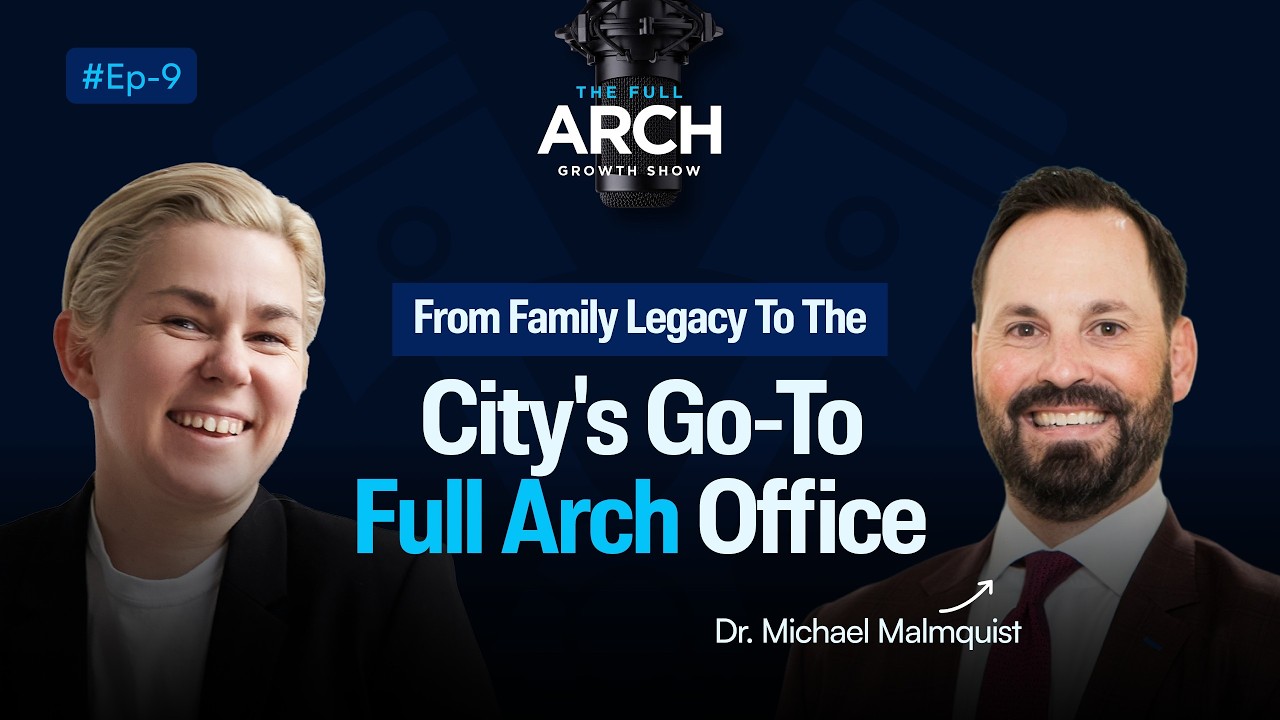
From Family Legacy to the City's Go-To Full Arch Office | EP. 10 | Dr. Michael Malmquist
Guest: Dr. Michael Malmquist
Full-arch implant dentist carrying forward a legacy of excellence.
Dr. Michael Malmquist shares his family’s implant dentistry legacy, the clinical importance of bone regeneration, and why over-treatment is a growing concern in full-arch dentistry. He also discusses boutique practice growth, direct-to-consumer marketing, and GP collaboration.
October 16, 2026
1:04:27
Listen on:
00:00|00:00
Key Takeaways
Dr. Michael Malmquist shares his family’s implant dentistry legacy, the clinical importance of bone regeneration, and why over-treatment is a growing concern in full-arch dentistry. He also discusses boutique practice growth, direct-to-consumer marketing, and GP collaboration.
summary
Dr. Michael Malmquist shares his family’s implant dentistry legacy, clinical approach, and journey building a premium full-arch practice. He discusses regenerative treatment, avoiding overtreatment, competing with low-cost centers, marketing, referrals, patient trust, and adapting to AI-driven search.
Chapters
00:00 Meet Dr. Michael Malmquist
Michael Malmquist
not all on four cases are just a bunch of bad teeth that all need to come out. Sometimes you’re looking at some healthy teeth and you need to make a decision based on the patient’s social factors, medical history, age, and some of their limitations. you got to look at the overall picture. Chelsea Morrisey
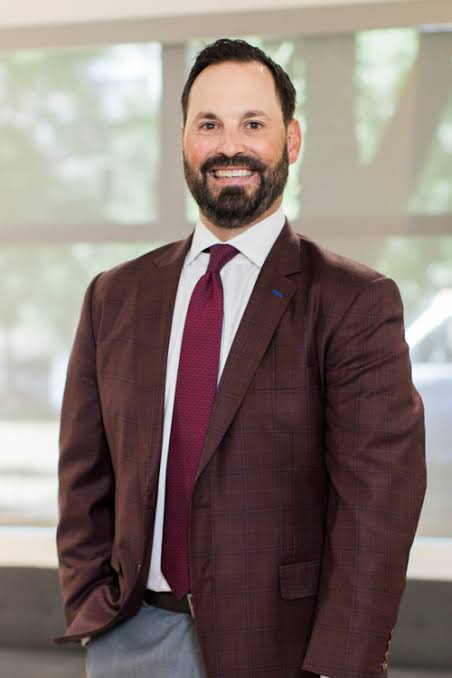
Some people choose this field. My next guest was practically born into it. Dr. Michael Malmquist is a board certified Oral and Maxillofacial Surgeon practicing alongside his father, Dr. Jay Malmquist, who is a well-respected pioneer in implant dentistry. But Dr. Michael Malmquist didn’t just walk into a ready-made practice. He went to the Citadel, trained at Baylor, spent an extra year mastering bone regeneration and full arch reconstruction, and came back to Portland to build something completely his own. Today, we’re getting into the family story, the clinical edge, what GPs need to know about bone before in over their heads and so, much more. Dr. Malmquist, I’m so glad you’re here. Welcome to the show. Michael Malmquist
Now, Chelsea, thanks for having me. Happy to be here.
01:12 His Father, Dr. Jay Malmquist, and the First Implants in Oregon
Chelsea Morrisey
I got to have dinner with you the other night and right after that dinner, my first thought was I have got to have him on the podcast because you are such an interesting and dynamic individual and also obviously such a talented oral surgeon. So I think everyone is gonna get something out of this podcast. I wanna start with your dad because your origin story is very interesting. Your dad, Dr. Jay Malmquist is genuinely considered pioneer in the implant space. I’d love for you to tell a little bit of his story. build, what did he figure out early that others hadn’t and what is he known for in this field? Michael Malmquist
great questions. And it’s an honor to get to talk about him. So it’s always fun to get to sit there and talk and brag about your father. So it all started back, let’s see, in 1984 is when he originally went and started his own private practice. Before that, he was in the largest group practice in Portland, Oregon. So you think about being a partner in the largest group practice and waking up one day and saying, I’m done Chelsea Morrisey
Mm-hmm. Michael Malmquist
gonna go do my own thing. A lot of people don’t do that. The main reason that he wanted to go do his own thing was because the group practice at that time didn’t believe implants were going to be the future. it’d be funny to blow that up in big letters now and call that office and see if they’re placing implants. Cause I know for a fact they are. So they are obviously the future. So that’s what kind of propelled his career was when professor Branemark came to the United States in 82 with dental implants at the Toronto symposium. You had to be a board certified oral surgeon to be able to place implants. And at the time you had to place, I think it was about 100 implants in the mandible for you could even do one in the maxilla. That’s the difference of the quality of bone that we’re dealing with. so when he took a course from Professor Branemark us being Swedish with the last name Monquist, P.I. took a personal interest in my father and that’s kind of what started the whole process. And so my dad was the first implant provider in the state of Oregon. And so I always joke and say that we’re the original implant center, you know, or the OG of implants in Portland. it’s it’s kind of fun just today I was sitting with him talking and he was showing me a case of number eight that he placed 36 years ago, the implant. And he was describing how they had to do the prosthetics 36 years ago with little wings because they had never done it before. he can tell me in 1988 when he did the first immediate implant. You know, it’s just crazy to hear these stories, but here we got pictures, Chelsea Morrisey
Yeah. Michael Malmquist
you know, lot of what we’re talking about today, we’ll talk about what’s the lifespan of some of these implants and prosthetics. And a lot of the book answers will say 10 years, you know, but here we got evidence of 36 years with no bone loss, none. And it’s an old Chelsea Morrisey
Yeah. Yeah. Michael Malmquist
smooth surface, machined implant, external hex. And so it tells you a lot that maybe some of these surface textures and designs of the newer implants are creating some of the problems that we’re dealing with. And we’ll talk about today. So, yeah, so we started Chelsea Morrisey
Mm-hmm. Mm-hmm. Yeah, very interesting. Michael Malmquist
with that and then it really took off into regenerative medicine. So working with membranes. And so I would call my dad kind of the expert with the white paper oncology and membranes are barriers. And so he worked with Gore-Tex, whether it was sutures or barriers back in the day. And so that’s kind of what helped evolve his career and get him into the political scene and the lecture circuit and become well known.
04:05 Citadel, Boston, Baylor and Back to Portland
Chelsea Morrisey
Yeah, yeah. So now talk to me a little bit about your own story because you didn’t necessarily go right into your dad’s practice. So tell me a little about your background. Michael Malmquist
Yeah, sure. Like you said earlier, you know, I grew up in Portland, Oregon, born and raised. And then I went off to Charleston, South Carolina, the military college. And from there, I moved up to Boston to go to dental school. And at the time, I didn’t even know if I wanted to go to dental school. I thought maybe I wanted to go to med Chelsea Morrisey
You Michael Malmquist
school because in my senior year in college, I broke my hand playing flag football. And so I know what it’s like to have titanium screws put into your fingers and so and to go through physical therapy. And so I had to defer my acceptance to school. And it took me about a year of physical therapy to be able to make a fist again. And so I got up to dental school and then once I got through dental school, I decided to practice general dentistry for almost two years in the Boston area. And I actually was at the forefront or start of what we call Medicaid dental or mass health back then. And so, you know, I was able to start a practice and get it up and running before I decided I wanted to go back and do surgery. I was seeing all these cool cases and referring them out and I decided I wanted to be a part of And so that’s why I decided that’s when I applied and got into Baylor and went to Dallas and did my residency there. And once I finished there, I stayed for a year and worked with one of my mentors, kind of refining my skillset, both in full arch implants, anterior aesthetic cases, but regenerative medicine and TMJ. So, and then in 2015, I came back to Portland and that was always the plan. It just took a while to get that.
05:34 Taking Over a Legacy Practice: 9 Reviews to 550
Chelsea Morrisey
Yeah. Yeah, that’s right. That’s right. So let’s talk about a little bit. You get back to Portland, your dad has an incredible reputation, obviously, but you inherited a practice that was, you know, decades old with little to no kind of online presence. What did you do next? How did you make it yours? You’ve built something really successful. So let’s talk about what you did and why you did it. And, you know, that decision making process. Michael Malmquist
So yeah, so when I came back at the practice that my dad built in 1984 was the same practice. And so, you know, he’s always been at the forefront about technology. So we had the newest and coolest with technology within the office, but the ambience of the office didn’t display that. And so the office was in an older building, kind of an older setting. And yes, you know, my dad would sit here and tell you that they were at the forefront with regards to online marketing or. digital technology because he had the first website and working with certain companies Chelsea Morrisey
Yeah. Michael Malmquist
developing websites. But when I joined the practice in 2015, we had nine reviews Portland’s a kind of a interesting city because, you know, it politics can be very one way or the other. And if people don’t like something, they’re going to let you know. so it worked. They weren’t the best reviews either because it had to do with certain. Chelsea Morrisey
Yeah, totally. Michael Malmquist
things people didn’t like. And so we just needed a whole complete revamp and change. And I had a vision of wanting to build a newer office that kind of displayed who we were, both from an aesthetic viewpoint, from an aesthetic eye with the office being newer and up to date, along with the technology. in 2018, I was able to find a new location down on the waterfront and build us a state of the art facility. with state-of-the-art technology that really represents more of who we are. And that led me into revamping the website and really putting a heavy focus on reviews and growing our online presence, just the reviews. So I took us from nine reviews to, don’t know, we have 550 something reviews now. And those are just people telling their stories. It’s not, you know, we’re not sitting there giving them coupons or gift cards or. anything else to leave a review. And that’s fine if people want to do that. It’s just, I’d rather people share their experience and their story so it gives a platform for others to read that it doesn’t have to be so scary. Chelsea Morrisey
Yeah, how do you get just quick side note here? How for any doctor that’s struggling to get good reviews, how do you get 550 reviews without incentivizing people? Like what is the process there? Michael Malmquist
Yeah, I just talked to him and I just, you know, they come in and they tell me how easy the experience was, how little discomfort they had, how happy they are with the overall experience or procedure. And so I just ask them, could you share that? could you explain that to someone else so that they can have the confidence to come into the procedure knowing that you are in a similar state and had a nice result? So people are happy to share their experience, good or bad. We prefer good. Chelsea Morrisey
yeah. Michael Malmquist
Yeah, but sometimes we need to hear the bad too. And so, you know, sometimes the bad can be related to, things that are under your control with finances or insurance or, maybe they’re just unhappy with one little aspect of things. But for the most part, it’s just nice for people to share their experience. Chelsea Morrisey
Yeah, I like that framing of you had a good experience help others who may be unsure. Michael Malmquist
it’s amazing when you talk to patients like that too, because they’ll even be willing to be a support system if someone has a question and wants to reach out. Especially in the world we’re in now with the ability for people to get a lot of answers with Chatgpt and AI. And just like yesterday, I did a secondary consult and the patient came in with a plethora of questions that was, I asked how she came up with these questions. and of course Chatgpt and we were able to find Chatgpt wrong. it’s kind of fun to see the new technology and AI, but it all has limitations.
09:15 Does a Practice Remodel Pay Off?
Chelsea Morrisey
I want to come back to the practice one more time. You rebuilt a brand new practice. And for anyone out there who’s wondering, should I stay in this dated practice? What is the impact of a remodel going to have? What would you say to them? And what impact has it had on your practice? Not a remodel, but a full rebuild. Michael Malmquist
yeah, no, we did a full build out, know, start to finish, everything brand new. And we did this in April of 2018. So just around the corner, we were getting hammered with, the shutdown and COVID. So, but it didn’t affect anything. No, it was the best decision I ever made. And it’s propelled our practice and our business to the forefront. I mean, the amount of offices now that are revamping their office and redoing or remodeling their office, especially a lot of my direct referrals, It’s kind of makes you feel pretty good. it’s like an indirect way of flattery, because I’ve had multiple people come to my office to check it out in any form of flattery is people that want to kind of copy things that you’ve done. you know, at the time I, we’ve been around for over 40 years, you know, so I told patients when they look at this office, you know, sure, it may look like the Taj Mahal of offices, but don’t think that it’s going to change our pricing or anything. You’re not paying for this. This is just to show you that we, we value the looks and aesthetics of our office just like we do with our work. So it just displays what we do in the mouth with our office, where I didn’t think the old office did that. So if you’re thinking about it, do it. That’s what I would say. Chelsea Morrisey
Yeah, good advice. I know that your business has expanded substantially since you did. And you think that that new office has had a pretty positive impact on the growth. Michael Malmquist
oh huge. And also you really want to look at your location. in Portland, it’s it’s a little different kind of city in the sense that people don’t like to cross the rivers. So, you know, putting the office at the waterfront, it allows me one, I have lots of hotels in the area for people that come from out of town. So I was thinking about that. But two just accessibility for anyone in the city or anyone in the state. So it’s very easy to get to. And everybody likes to be on the waterfront because There’s a lot of activity down here to do.
11:11 What GPs Need to Know About Bone Before Implants
Chelsea Morrisey
Yeah, wonderful. So I’m gonna do a little bit for some of the GPs that might be listening. A lot of GPs are doing for large cases, okay? Or they wanna start. What are the key signs they should be looking for to tell them if a patient needs regenerative work before implants go in, not after? Michael Malmquist
Yeah, so obviously you’re gonna wanna do a thorough consult with the patient and kind of get an understanding of what the patient wants. I think treatment planning is, it’s a skillset that a lot of people in this world today lack. And I feel like we need more treatment planning seminars and educational platforms to help, and I see it every day. And some people can look at a PanaRx or CT scan, and right away come up with a plan and others can’t. And so they really need to be able to hone in their skillset and look at everything because not all on four cases are just a bunch of bad teeth that all need to come out. Sometimes you’re looking at some healthy teeth and you need to make a decision based on the patient’s social factors, medical history, age, and some of their limitations. you got to look at the overall picture. the one is just getting a good history on the patient coming up with a good plan. But then obviously with the technology we have nowadays with internal scans, you can get really defined models. And then as well as CT scans, you can evaluate the bone quantity, but you can’t always evaluate how much of the bone has good quality. So I think we’re if I was going to say GPs get themselves in trouble. is they look at a CT scan, they think they got all this good bone when the teeth are there, and then they take the teeth out and they’re up a creek without a paddle because now if maybe Chelsea Morrisey
Yeah. Michael Malmquist
they don’t have quite the bone they thought or the bone quality is poor and they can’t get primary stabilization with the implants, and now you’re having to think outside the box. And that’s where a specialist can really come in and help because there’s things in our repertoire we can do that maybe not everybody has. Chelsea Morrisey
so you obviously recommend establishing a really good relationship with a specialist. What are some common mistakes that you see GPs make when they’re trying to execute these cases? Michael Malmquist
poor execution. I hate to say that. mean, but it’s the truth. That’s what I see is, you know, I’ll get there. They didn’t do a proper workup. They didn’t execute, a step by step protocol, plan to get to the final solution. nowadays, with all the digital technology, you could have a digital workflow that you need to follow precisely, but you can still get yourself into a situation when you get into surgery. We don’t know what it’s going to be like, We don’t know how difficult the teeth could be to remove. We don’t know how the bones can respond when we do remove those teeth. And then what the quality, you know, that bone is going to be like. So I think really having a good plan and then having a backup plan too, in case you get into a situation, I feel like probably 95 % of time I can always load a mandibular full arch, but the maxilla is a different animal and that bone is, is completely different. when I first started doing full arches, I did bilateral sinus grafts on every full arch case I did, no matter. even if I could put the implants tilted in front of the sinus. That way I always had backup in case, one of those implants had a problem. Now I’ve got reserved bone in the future to be able to go and do. So these were things that I would do that just helped set me up for success in case we had one of those revisions that needed to be done. Cause everybody’s going to have. Chelsea Morrisey
Yeah, yeah, absolutely. Any other advice on this front that you feel is relevant to share? Michael Malmquist
Yeah, i mean, especially in Portland, and I’m sure it’s like this in wherever other people are listening, these clinics are popping up everywhere left and right, but are they sustaining? you need to have a really good plan, you know, with regards to if this is what you want to do and you want to fully invest and divest in this, then you need to have a thorough plan. I think if you just want to dabble a little bit in implants, then you should get together with a specialist, whether it’s a periodontist, an oral surgeon, someone that kind of backs you in their corner. like I do a mentorship around town here. So I have lots of dentists that I will directly teach on how to do this stuff. So if they have a problem, I can help them. But in return, you know, then we can work together and I can help do some of their more complicated cases. it’s scratch my back kind of thing. But I enjoy teaching. I have no problems helping anybody, but I get mad when people just, they get out there and they’re swimming in the deep end without learning how to swim. Chelsea Morrisey
Mm-hmm. Yeah. Yeah. Michael Malmquist
So they’re sinking. And the patients are the ones suffering. you know, and unfortunately in Oregon, we have a subcommittee with our dental board because we have so many complications with implants, because you do have a lot more. Like I said in the beginning, you know, in 1980s, you had to be a board certified oral surgeon to place implants. Now anybody can place implants. And now we have different implants, you know, and we have, don’t know how many implant companies are out there, 500. And how many of those are really premier implants? and how many of those are 99 % titanium and biocompatible and you know, we could go through the whole plethora of things. So product, I think if you’re new starting out, you need to get with a company that’s reputable, that’s premier and is gonna help you, back you, you know. You want something that’s gonna be recognized in the science. You don’t wanna use some knockup and that’s the problem. You’re seeing a lot of people and I’m sorry, I don’t mean to use the word knockup, but you’re using some of these lower cost implants, you know, without the structural support and people are just looking, these sales teams are looking to make money and they’ll tell anybody anything, you know, we have this surface texture on this implant. It’ll integrate in six weeks, it won’t. know, so that’s, you know, people just need to understand the basic science. And I think we’ve lost that.
16:27 A 36-Year Implant and Choosing Premier Brands
Chelsea Morrisey
Yeah. Now you mentioned something really interesting about how your dad placed an implant 35 years ago. Tell me a little bit about that story and how does that relate to the quality of implants today that people are placing? Michael Malmquist
Well, that’s how we learned how to get to our, three to two rule with implants, three millimeters apart and two millimeters or a millimeter and a half of buckle, palatal bone, lingual bone, because they didn’t know. And they were thrown in super long implants. now let’s put in zygomas or pterygoids, we’re trying not to put in implants past 15 millimeters because they’re hard to irrigate. So you’re getting burnout, from overheating the bone. So these are all small little things they learned. But what we’re seeing is the original implants, and this will rhyme, tissue is never an issue. So, Chelsea Morrisey
You Michael Malmquist
you we go back and everybody wants to talk about, oh we put these threads on this implant and this surface texture on this implant and it can integrate at six weeks, but what happens when the bone is lost? That’s because now we have peri-mucositis and peri-implantitis because of the surface texture and threads of the implants. So bone and tissue become an issue. Whereas if you read back in Branemark’s original books, They never talk about carotiditis tissue. Didn’t exist. They didn’t care because they were smooth surface implants. you know, some of the technology is the advancements are beneficial with some of it. You know, I wouldn’t be surprised if we revert back to some of the old school styles of implants. It’s because they do so well. I have the benefit of seeing implants that replaced 40, 35, 40 years ago and they have no bone loss. and then you put them next to implants that are newer and you see a difference. Chelsea Morrisey
any recommendation on implant, like companies that you would implant brands you would pick that you use for. Michael Malmquist
I try to stick with the premier companies, you know, I call them the red and green, The Straumanns and Nobels and then they have their little parent companies that come off. those are the two companies that I feel strongly working with because the science is there. It’s backed and they have the team to help back you as a clinician, for the support. Chelsea Morrisey
So if anyone’s thinking about, hey, I want to get my costs down on this procedure so I can make more money, that’s not an area that you would recommend that anyone cuts costs on. Michael Malmquist
I would not cut costs on the actual product. Not in my opinion, no. Chelsea Morrisey
on the quality of the end points. Yeah. Is there any way, any area in which, just to kind of follow this through, there any area in which you found that people can find cost savings in doing this procedure in areas that you think that people could increase their margins a little bit? Michael Malmquist
Yeah, i think you, know, obviously as you have a better relationship with some of these companies and you can negotiate some deals and they can, help to kind of better the margins for you. But, there are a lot of companies that maybe aren’t considered premier top tier that still have very good product. And, you just have to find what works in your hands and what works best for you. I’d rather not sacrifice more gain from a cost standpoint and know that I’m putting in, you know implants that makes me sleep better at night, I like to use all brand labeled attachments and parts with all my implants. don’t use any aftermarket. And that way it’s all warrantied. And that’s a big thing that I utilize when I talk to patients is, and I’m sure we’re going to talk about this later, I’m not the cheapest in town. So how do I compete? It’s because I have a good reputation, but I also, I let the patients know that I’ll have their back. And so that’s where the premier companies will help you, with regards to if you need to revise certain implants. And some of those other companies may not do that.
19:43 Regenerative Advances and Learning the Old Way First
Chelsea Morrisey
Yeah, so What are some of the most exciting advances you’re seeing right now, either just in the implant space in general or in regenerative surgery, which I know is a specialty of yours, new studies, new materials, new techniques? Michael Malmquist
with regenerative medicine, I’m a huge advocate, back in the day, autogenous bone was a gold standard. And maybe a lot of people would still say this but get someone to say, Yeah, please take bone from my hip. It’s not gonna happen, you know, or take it from my knee or, take it from my tibia or you know, they’re just not gonna want that. And so I utilize a lot of recombinant to BMP the bone morphogenetic protein and I do my way with a scaffolding, but now with digital technology, you can get these 3D printed scaffoldings, which are phenomenal, that are pre-fabricated to the defect. And so you lift up the tissue, you can secure these, you’ve got your scaffolding to hold the space. And there’s a lot of studies showing that all sorts of different Allografts, Xenografts, Particulate, along with BMP, you can regenerate a lot of bone without to necessarily have a donor site morbidity. And so that’s exciting. I kind of modernize and create my own scaffold with titanium mesh based off models and building them up and doing it myself. You can have it, 3D printed, you can have a 3D designed, we’re coming out with new barriers and membranes are getting better, more structural support integrity with the membranes. that it’ll last longer and hold space. So maybe we don’t have to use something that can be a little bit more of an irritant to the tissue like titanium. So that I love in regenerative medicine. Plus there’s newer implants, there’s talk of Mechanical Integration versus, Osseointegration Mechanical Integration is big in the Orthopedic world with an interlocking fixation system. So that would be fantastic. Imagine if we put an implant and load it that day, and then you’re going to get Osseointegration later, Obviously we load implants in a group setting where we have cross-hours stabilization and we’re grouping the implants together so they’re sharing the load, but I’m talking individual implants and loading them right away with Mechanical Integration and down later they’re going to have Osseointegration then everything with regards to, now we’ve got the robots and the Yomi and you know my father was just in Asia not too long ago and they’re doing crown preps now. the robots are. In you put it in there, as long as patient doesn’t move, it’ll prep the crown. we’re not to the point where right now we still need human with machine when we’re doing all on four, you know, a lot of it’s digital, but the machine can’t do it all. And so who knows where we’re going to be down the road. and then the thing that concerns, obviously, Is bio materials, the advancements in bio materials. and that’s only going to continue to get better and structurally stronger. You know, probably the biggest downfall with some all fours is dealing with the prosthetics. it’s the chipping of the teeth or the fracturing the prosthetic hygiene maintenance on certain processes. You know, what type of materials are you using? You know, because certain materials require more maintenance than other materials. I’m not the prosthetologist, but We do quite a bit of our own restorative here, but we also work with a solid group of restorative dentists as well as prosthodontists. So I’m excited about it, I just think the technology is just gonna continue to climb, but you need to have the basic fundamentals. And that’s where I think when I hear about the dental students and people in dental school is they’re losing some of the basic foundation of what we do, you need the basics before you can advance to the newer technology. And so if I was educating teaching, I’d go back to the basics and then get them into the advanced technology once they understand how to do things the old way. Chelsea Morrisey
why do people need to do things? No need to know how to do things the old way ? Michael Malmquist
You know, the best way I can describe it is like in my training for orthognathic surgery, we used to have to do model surgery, old school, multiple models and, mount the models and then cut the models and set them. And if you learn it that way, if you get into the OR and you have a situation, you’re going to be much more prepared than if you just throw a bunch of stuff on a computer or have some technician on the other side showing where he’s going to make cuts, moving things. You’re more of a technician than you are, you know, clinician at that point, because you’re losing some of that skill set of planning the procedure. And so I think if you know the basic fundamentals, it can help you if you get into a situation where not everything lines up perfectly. with implants and all on, a lot of people, especially if they’re inexperienced, like to use stackable guides or surgical guides. Well, I can tell you those guys don’t always work well. And so you need to be able to understand how to correct a problem on the fly. If you’re little mountain guide doesn’t go perfectly on or you thought it did and you get to the end and uh-oh, everything wasn’t done right. Cause if you screw up step one, step seven is going to be screwed. I just, feel like too many people are relying on technology and not their basic fundamentals of understanding the science and the, the biologic principles, if you think about a bone cell, hasn’t changed. for someone to come in as a rep and tell me, well, we put this special surface on here and this implant will integrate at six weeks. not going to, I’m not going to listen to that. So. Chelsea Morrisey
So what I’m hearing in all this is that you have this level of confidence and that confidence is coming from the fact that you have a really solid foundation, even before you brought all this technology into the office, you have a solid foundation and that gives you confidence to be able to handle these cases no matter what happens. Michael Malmquist
Oh, absolutely. Yeah, without a doubt. and I think patients, they recognize that I just talked to patients as if they’re one of my family members or a friend or a lover. mean, Portland is a small community. It’s a it’s a small I call it a small city, big town, you know. And so patients are going to recognize right away if you’re full of it. they can they can tell one right away. We’re passionate. We care. that we have know, the basic foundations and fundamentals of what we’re doing. Chelsea Morrisey
It’s interesting because, I run a marketing agency, but same is true. You you think people are like, you can do so much with AI now. Why do you need someone to write your ads? Why do you need this? Why do you need that? Well, let me tell you, AI doesn’t write good copy. It assists a good copywriter. That’s it. Michael Malmquist
technology is great. But it’s like we talked about, there’s limitations and And patients still want to have that human factor. I doubt I can get a patient to sit there and let me just program my little AI to put an implant in for him and I’m gonna walk out. I don’t think that’s gonna go very well. Not in my office, at least. I still Chelsea Morrisey
No, no, we’re a long, we’re a long ways from that, I Yeah. Michael Malmquist
like having control.
25:49 Speeding Up Recovery
Chelsea Morrisey
Yeah, for sure. Let’s talk about, recovery time. what is your advice for kind of speeding up recovery, speeding up that result and still providing a really good outcome? Michael Malmquist
I mean, technology is a huge aspect of that, but it’s all how you set the patient up for success, So it’s your pre-op, it’s your initial consult. It’s understanding what the patient’s looking for, what they would like, from a result. Is this more functional aesthetics, combination of both? Is there certain things with their teeth they don’t like if you don’t listen to the patient, you can’t give them what they want. You’re setting yourself up for failure from the beginning. So right away, it’s all about just listening, finding out what the patient wants, and then executing that. and then it’s attention to detail. I let the patient know pretty much exactly how it’s gonna go and I show them a step-by-step process it minimizes my surgical time, it minimizes their chair time, and so it minimizes their post-op sequelae, their swelling and discomfort. Plus I use a lot of long acting local anesthetic, certain medications that minimize their post-op pain, but if you do good surgery with regards to this, the patients don’t have a lot of discomfort afterwards. And so, you know, I tell patients that, and that right there, you know, they don’t believe you until they actually have it done. So I just saw a patient before I came on here, I did six days ago, upper and lower, and she’s doing great. She had barely any swelling, I mean, she looked fantastic. So, you know, it’s just, all about execution and planning.
27:15 The Over-Treatment Problem
Chelsea Morrisey
If there’s one thing you could tell people doing full arch that maybe they aren’t paying attention to or studying right now, what would it be? Michael Malmquist
that’s a really good question that could be an open-ended question that you could discuss in all sorts of different ways. I think the biggest thing I’m seeing is over-treatment. not that patient age is necessarily the key factor, but it is when we’re talking about doing a radical Alveoloplasty, removing a significant amount of bone to create a certain amount of space to put the implants in and the prosthesis. On a 34 year old, that doesn’t sound as promising because you tell me it’s going to last 10 years. What do we do when they’re 44 now? so we’re, got to think about the long term too. And, like I said earlier, we know implants can last if they’re done right. so, sure, maybe the prosthesis needs to be changed, but sometimes I think, not everybody’s an all on four candidate, maybe you talk to them about doing something to prolong the health of certain amount of teeth. and down the road, you set them up for an all in four. or an all in six or fix on six, whatever you want to call it, you know, but not every person is, the most ideal candidate for an all in four. And there can be a variety of different factors. And I just think some of these centers, they don’t look at that, you know, half the time these, these patients don’t even see the doctor until they’ve approved, been approved through finance. And then they get five minutes. That’s just not the way I do things. And I know Sometimes it limits my ability to see more patients, but it also is a personal touch that I like to do. I can design a treatment that fits that person’s needs. Because they’re gonna lose a lot of things when they lose their natural teeth. Implants are great and they revolutionize what we do. And they’re one of the greatest inventions of the last century. But at the same time, not everybody needs to have all their teeth extracted and implants placed right away. Just looking outside the box and coming up with multiple plans. I love treatment planning, so it’s fun. It’s giving patients different ideas of how we could restore something and letting them think about
29:16 Where Full Arch Is Headed
Chelsea Morrisey
Yeah, so as we know, you’ve trained kind of at the highest level. You’ve watched your dad sort of shape this field. Now you’re in the middle of it. This is your chance to tell me where do you think Full Arch is going? Give me your 10, 20 year outlook. What is this space going to look like? Michael Malmquist
You know, it could be a little gloomy. full arch, so all on for the tilted implant just celebrate his 25th anniversary. So we’ll say it started in 2000, you know? 25 years is a long time to be able to go back and look at things. But what concerns me is, the, The amount of clinics that are popping up everywhere and the limited amount of skill set maybe that some of these clinics have with regards to their practitioners and clinicians, I feel like it’s going to limit their ability to really do a thorough job in treatment planning and people are being over treated. That’s my thought and it makes me worried because we’re have all these younger patients now with significant reduction in bone with problems and how are we gonna build these people back? that’s gonna be interesting. I hope it’s on the other end of the spectrum and that things are just only gonna continue to get more advanced and better and that we’re not gonna be over treating patients and we’re going to be able to provide them longevity of teeth, whether it’s third generation implants with fixed prosthesis or implants with teeth, That’s where I see the future. I only see the future, improving, but I just worry about some of the problems we may see from over treatment with a lot of these all on fours
30:31 Additive Over Subtractive
Chelsea Morrisey
there may be problems, but also opportunities that could present themselves. Like, where would you say an opportunity might present itself for someone listening if, in fact, folks are being over-treated? What should they do? Michael Malmquist
Well, I think you go back to the basic principles, you know, let’s go back to additive treatment instead of subtractive treatment. And what I mean by that is when I first initially started doing all in fours, I did bilateral sinus grafts for everybody, no chart. It was just part of my treatment. I took the Alveoloplasty crushed the bone and did sinus lifts. That way I was preparing for potential possibility of needed surgery in the future. So if more people were looking down the road, what we’re going to do when this needs to be revised, I think that would help. everybody’s just kind of wants to get in there, take the teeth out, reduce the bone and put the implants in. It’s like, but let’s think about what we could do for the future if those have problems. So, you know, a lot of people love the graftless solution, I placed tons of Zygoma implants, Quad Zygomas, but if you were asking me what I’d rather have, I’d rather have, bone graft and implants. And so I think, I’m a little bit more in the old school kind of an old soul, if you will. And so When I do things, I try to plan for possibility of a revision down the road. So I’m preparing for that with additional bone grafting. So I’m more of a grafting person, not a graphless solution person. So I try to look at it down the road. So if more people Chelsea Morrisey
Yeah. Michael Malmquist
do that, i think then it’s going to help minimize potential complications. Chelsea Morrisey
And I also think it presents an opportunity to win trust with a patient when you do tell them that there’s other options. You know, maybe they went to Nuvia or ClearChoice and they are 35 and they told them they have to have all their teeth out. And I think there’s an opportunity, even if this in the end is what you do for them, him or her. But I think presenting additional options is ethical. it builds trust with the patient, that you are providing them with various options, right? Michael Malmquist
It’s I couldn’t agree more with what you just said. Even if you end up doing what the previous provider had stated they wanted to do, patients will recognize if they walk in how ethical you are. If you sit down and you give them a plan and you work up multiple options versus just saying, you’re an all in four, that’s it. We’re just going to do an all in four. They don’t want to hear that. You can start breaking down the teeth and as to why we could do this, why we may need to do this, what they’re looking at long-term with maintenance and frequent visits. Some patients, I bet tons of people listening to this, they’ve had patients walk in and say, I just want all my teeth out. Just take them all out. I don’t want to deal with them anymore. It’s like, no, you don’t. You want to hold on to as many natural teeth as you possibly can because you lose certain feelings, proprioception, certain aspects. Even the taste can be affected. You know, these are things that you just you’ll miss and you can’t get it back. It’s interesting when you do implant cases for patients that are dentalists versus patients that have terminal dentition versus patients that have reasonably decent dentition but need to lose it, you know, to get implants. Their response to getting all on four is way different. You put someone in a denture and they wear a denture and then you put them in all on four, they’re the happiest in the You take someone from a full mouth occlusion and you put them in an all on four, it’s going to take some getting used to. You take Chelsea Morrisey
Mm-hmm. Yeah. Michael Malmquist
them from a full mouth to a denture to then the implants, they’re going to appreciate the implants. there’s that aspect of things. So I’m not saying that, you know, put people in dentures necessarily, cause that’s a little old school and barbaric, cause it’s just, especially on the lower patients just can’t function. and they can’t taste and they can’t, food doesn’t taste the same and everything’s just, and then, you know, the prosthetic has to be built a certain way and designed so it’s not bulky and it feels more natural. And then you get into the phonetics and speaking engagements and these are all important aspects of things. It’s not just how the teeth look and what color are they and, you know, where’s my smile line in relation to my lip line and, you know, there’s a lot to take in. So, you know, it’s not just take out teeth and drill a hole and put screw in hole. i just wish that everybody would just take it, every patient and spend thorough amount of time going over all their possibilities rather than just throwing out that you’re just, you know, an all on four type case. Cause we’re still dentists, and we’re still in the process in the business of saving teeth, but that’s not always the case. And sometimes certain teeth need to be sacrificed for the better good or, to just help with the treatment plan. Chelsea Morrisey
Yeah, and you know, it is a little extra work, but I do think it is great positioning against some of these big implant centers and it does help you build the relationship. And like you said, patients need options and want options. know, a lot of the reason why 35 year olds won’t move forward with all on fours, they are not ready to have all their teeth out. And that was the only option they’ve given. mean, that thought terrifies them. So positioning yourself as someone who will provide multiple options, including options to save your teeth is, I think, a really valuable positioning in competitive areas. Michael Malmquist
And there’s different ways you can do things, not to get into all the technical aspects, but you know, there’s, there’s so full arches would be considered like an FP3 type thing. And if you do like a direct to fixation, type prosthetic, maybe you can take out teeth, put the implants directly into the sockets and maybe you can have them wear that for the next 10 to 15 years. Now you’re not doing any bone reduction because you’re doing direct to fixture, you know, fixtured implant, you know, stabilization. So that’s an option. And if, but that’s more technically challenging. So if people can hone in their skills to be able to provide that to someone who’s 35 years old, then that gets us to 50. now if we get to 50 and we can get 25 years, then we’re at 75. So it just makes sense. That’s the way I look at things. You know, what can I do to prolong the need, you know, for an all on in a radical alveoplasties? So are there different ways I can do things that we don’t have to take as much bone away
36:13 Competing With Low-Price Implant Centers
Chelsea Morrisey
I think this is a good segue into my next section, which is you’re succeeding in a really competitive market with a lot of low price providers, despite the fact that you’re offering a premium service, you’re not cutting corners as we discussed. and you’re successful. So what do you think your secret is in doing what you do and helping patients to understand the value of what you do and buy your product at a higher price, despite the fact that they can get in their eyes, something somewhat similar up the street for half the price. how do you position yourself and how are you so successful? Michael Malmquist
Three second opinions. I think it’s a very competitive market and these implant centers are popping up all over the place and I’m seeing them on commercials and left and right. I love the opportunity to be able to have someone kind of see one of those clinicians or clinics and then come and see me, you know, cause it’s just going to be a completely different situation and. A lot of times they can see the difference between the way that they’re treated here. It’s just more boutique here. It’s going to be a more personal touch, And I’m going to spend quite a while talking to the patient. And I’m sure there’s a lot of other offices like that out there, but you know, it’s being transparent, it’s being honest. And again, it goes back to just listening. And I feel like too many of these clinics, they don’t listen to patients. They just don’t. This is what you’re going to get. This is option A, this is option B. This is the acrylic with the titanium bar, this is zirconia. If you do zirconia, we’ll give you a lifetime warranty. But they’re also using products that are maybe not to the top level of Premier. And so you get what you pay for. And then what’s the expertise of the people that are providing these treatments? And so I always ask patients, or I’ll give them a list of questions to go in with. That can be everything from what’s your education, to what’s your expertise, how many of these have you done, are you board certified, and that’s a whole nother animal that we can get into because people can get quote unquote certification online and call themselves a specialist and that’s kind of scary. So I really, think education, education, education. If all I’m doing out there is educating the public and just letting them know what we can do for them, word of mouth gets around. And so that’s really kind of helped. propel my practices, the reviews, people’s testimonies, people getting out there and talking in the town, and going to some of these other clinics and understanding what you get is what you pay for. Chelsea Morrisey
Yeah, and I know we run a lot of second opinion ads for you for that reason, because I know that when they meet you after they’ve gone to a place like Nuvia or ClearChoice or something, they are going to have a really good experience. And, you know, a lot of doctors that I meet are like, I don’t want to be, you know, people’s second and third consult. I’m like, why? because those are the easiest ones to close when you’re a boutique office and you really spend time with your patients. And it sounds like you’ve had a similar experience where second opinions are great for you. Michael Malmquist
I absolutely. mean, just like that. I had that patient the other day. I think he had seen three or four different clinics, and he was very happy to understand all he cared about was just the gap between his teeth That’s the difference. That’s just one. listening, and everybody else telling him, can’t be done. It can’t be done. Come on. I mean, that’s, just tells me that those that they’re just a one stop shop. you know, this is what we have, this is what we’ll give you and it’s not customized at all to that individual patient’s needs. And so that’s what sets us apart. That’s what makes us more aesthetic, and different, these other. Sure. Yeah.
39:32 How to Structure Consultations
Chelsea Morrisey
That’s why people are willing to pay a more premium price to work with you. And so for doctors out there, in order to understand the gap in the teeth, that person might’ve come and said that first thing to you, but a lot of times people have really specific things that are important to them, but you have to get that out of them in order to provide them the custom service that they want. How do you structure your consults? What kind of conversations do you have with patients to where you’re able, because you’re talking about treatment planning. patients to really get a good treatment plan going for them. Michael Malmquist
Yeah, so even before I start talking about treatment, it’s all about just building a rapport with the patient. So, you know, I never call myself doctor when I walk in the room, you know, right there, it’s just kind of, they know who I am. And they know by based off when I start talking that I know what I’m talking about. So I don’t need to tell them that I’m a doctor. It’s so I just go in and introduce myself as Mike and right there, I kind of feel like it puts a sad and even kind of a level playing field. And then it’s just, I get to know them. I get to know their history and I it sounds kind of cliche or what, but it’s true. And once they feel comfortable, Then, and you’ve developed a rapport and you have a connection. I always try to find a little something that connects me to that patient. It’s something little they talk about, whether it’s gardening or golf or sports or just finding something I connect to them with and then I can take them down that path for a while and then I can start getting into the treatment. And basically what I do when I get into the treatment is I ask them, what are you looking for? What is it that you are missing or need or? And a lot of times they’ll show you a picture of what they used to look like, or they’ve had some trouble in their life or they’ve gotten down on their luck financially. yeah, listen, none of this is cheap. It’s all expensive. And I tell them that. this is, I don’t want to ever sound like a car salesman, but it’s like buying a car. You’re investing in your health. And so you’ve got to go find the right car person that’s going to be able to execute this for you. so, and just building a rapport and a reputation is… has helped us significantly. I love second consoles, because you’re right. that’s a low hanging fruit. And you can go get that all day. so Chelsea Morrisey
Mm-hmm. Mm-hmm. Michael Malmquist
I enjoy that aspect. I always make it worth their while, I typically don’t even charge them for a second opinion, and if they see me first, I tell them to go get a second opinion, because I’d like to have them come back and, see what they found elsewhere. if there was something that they connected more with, if they even come back, which they typically do. Chelsea Morrisey
Yeah, yeah, yeah, it sounds like when for the most part, you guys, almost everyone comes back to that second console that you guys seeing. Michael Malmquist
yeah, because I always like them to kind of think about things and I know that you know we like them to leave with a treatment plan but they do come back for just to kind go home and process things maybe bring one of their loved ones or family members with them and we can go over you know I love talking about this stuff so I have no problem sitting there and one of the things I designed in my office that’s pretty cool and I recommend this to anybody and they don’t have to necessarily do this but All my screens in my console rooms are interactive touch screens. They’re like giant iPads. And so when you can get up there and draw and show people, it really enhances their education and their learning process. And they’re really paying attention. When you’re just talking, they probably you’re comprehending like 10 % of what you say, maybe. And then they go home, they’re like, God, can’t remember anything. But when you’re drawing it, and they’re looking at it, and they’re like, Oh, that makes so much sense. It just really helps to engage the patient and into the console. they don’t want to be talked to they want to have a conversation with you. And so I spend a lot of time with patients, sometimes probably too much.
42:46 Referral Partners and Direct-to-Consumer Marketing
Chelsea Morrisey
Yeah. So let’s talk about your relationship with referral partners. I know referrals are a big part of practices like yours. How do you navigate that relationship now that you’re also doing direct to consumer marketing? Michael Malmquist
Yeah, so it’s not just directed consumer marketing, right? I also brought my wife in as a restorative doctor. So we’re restoring things in house as well. And so, you know, I have to, I basically just went to all my A, top A, top B, top C referrals and explained the situation of what I was doing and how this will better them because I send a lot of these direct to consumer patients to them as well. I, and so I give back. And so it’s kind of a scratch my back, scratch your back type of thing. All my referrals know that I would never take a patient from their office. It’s Chelsea Morrisey
Mm-hmm. Michael Malmquist
just not gonna happen. That’s not what we’re here for. I’m here to have someone restorative so that if I’m not available and they need something done, we don’t necessarily have to always send it back to their office. So it allows them to send patients to us and know that we’re here available. Like let’s say a screw comes loose and we can go replace that and they don’t have to deal with it. They actually like it. a lot because they know now that we have someone in the office that’s got the restored skill set that can take care of maybe little things they don’t want to deal with. And so that’s helped. But, know, I’ve worked a long time with these people with these dentists as well. And even the newer dentists, I just I let them know that, you know, they can text me call me. I’m always there for them. I call them the you know, the drive by consoles. And so that that security blanket makes them feel very comfortable. And knowing that, you know, if If there’s an issue that they can’t handle, we can take care of it here for them and help them out and bail them off. So I always will take care of anybody that works with me, and back them. And that’s kind of my segue way to the people I work with is, if you want to go and place things, I will help you, but if you’re out there on an island by yourself, you’re going to be by yourself. You better know what you’re doing. Chelsea Morrisey
So I have doctors come in, oral surgeons will say, I’m scared to run direct to consumer ads because I’m scared to lose my referral partners. So essentially what you’re saying is you went and had a pretty direct conversation about what you were going to do and let them know how that might. benefit them, but also let them know that you would never, you know, take their take, steal a patient. But basically you had a really direct conversation and for the most part, your referral partners have stayed intact. Michael Malmquist
yeah, I really honed in on the fact that it’s going to enhance their practice and make it better because I am going to, send patients back, you know, not just their patients, but new patients, is because I want them to know that I’m gonna take care of them. But yeah, I think just being an open book and having a conversation, some people took it better than others, some people still felt a little bit, but it is what it is. But I haven’t seen a significant drop in my referrals at all. Only thing I’ve seen is with your company is increasing my overall patient pool and I’m getting a significant. increase in new patients.
45:37 Why OMSs Should Stick With Direct-to-Consumer Marketing
Chelsea Morrisey
So what would you say to an OMS that’s on the fence, never done direct consumer marketing, kind of on the fence about starting implant marketing? Michael Malmquist
stick with it because once you start, you you can’t just bail on it. You got to give it time. You know, this stuff takes time, but you need to find a company that you’re comfortable with, that you get along with, and that is going to support you. And if you were asking me, through all my years now of getting into this, certain companies I’ve worked with, that was the major downfall is it was turnover, you know, just like we have in our office, and people have in their office trying to maintain staff is hard in any profession. And so, it’s hard when you have continuous turnover with the people that are supposed to be guiding and leading your team in the marketing world, which I’m still learning a lot for obvious reasons. So I just stick with it. Cause if you continue just to bail on things, it’s never going to pan out. So you got to give it time and then you got to find what works for you. I would tell all OMS, don’t be afraid to go to direct to consumer marketing. It’s everybody else, it’s the world we live in. And if you just sit back and rely on the old school model, majority of the dental schools are teaching the dentist to come out and do everything themselves. At least the school around here. And it’s a productive model that they’re teaching. It’s how to be productive, make more production to make more of a healthy income. which I’d rather hear, provide the most ideal care to the patients and be a really good clinician. But that doesn’t seem to be the case. I get more more students calling me all the time and saying, hey, how do I take out this to you? Or how do I do this? And it’s fine, I’ll teach them. at the same time, you need to hone in the skills that you’re good at. And that can make you more productive and more profitable than trying to do a little bit of everything. But I would tell the OMS is absolutely, if you’re not getting out there and direct to consumer marketing, then you’re just gonna be continuous. You’re just gonna be falling behind. Chelsea Morrisey
And I’ve spoken to a few that waited too long. And they said, you know, I should have done this years ago and my referral partners have dried up. And some are saying my referral partners are drying up. But they are concerned about because of that they’re concerned about losing the referral partners that they do have. And it’s good to hear your story that your business has only gotten better as you’ve on direct to consumer and it hasn’t impacted your referral business in negative way. Michael Malmquist
You know, if those referrals really value how your skill set and how you benefit their practice, you know, I look at our office as only building and benefiting the referral offices because we treat their patients very well and we do excellent work for them, you know, and if you start sending to another practitioner that maybe isn’t to that level, you could start losing patients because they’re unhappy with. Who you refer with is a direct reflection of who you are. And if you refer to another office and they don’t like that office, it’s gonna reflect back on you. so, the offices I work with are very happy with the report they get back from the patients. And so, you know, I just tell them, you don’t wanna lose that, because that’ll affect your bottom dollar. And I’m not saying I’m the vet, I’m just saying, you know, once you’re comfortable with someone, you should stick with it, the patients recognize when it’s a team effort. And when you’re cohesive team, like I talked to these, my referral docs every day, I’ve talked to three or four of them today, through text. And so they love that. They love responsiveness, attentiveness, talking to them, being there for them, and knowing that, you know, I’m not going to do anything that’s going to take away from.
49:25 How Long Campaigns Really Take
Chelsea Morrisey
Yeah. And we talked about, you know, some of your advice was to stick with it. I was looking at your numbers today and this is just, you know, a lot of people talk about these huge big numbers online and it’s like, it’s, not painting the full picture, you know, for the most part, you know, these campaigns take time. Usually we see, you know, good success in campaigns at the 90 day. four month, five month mark, depending on how competitive the market is, but then things can be really, really stable and profitable. But like you said, if you pull the plug too soon, you’re just starting over and over and over. I was looking at your numbers today and it looks like by month three, we were at about a seven X return, but in the last 60 days, you’ve spent about 7,400 on ads and returned. 95,000. And so things are starting to pick up and that represents a pretty dang good return. What is your kind of secret? Have you changed anything about what you’re doing? What’s been your secret to kind of getting this campaign to start really closing and working, or is it just time? Michael Malmquist
Yeah, it’s it’s trial and error. first, you got to get the team on board. That’s the hardest part. especially if you’ve got some, longevity with regards to your staff, when you’ve had an office around for a long time, some of your staff are setting their ways. And it’s really hard to get them to adapt to new protocols and these dashboards, which are made to allow them to be able to follow patients and make things easier, even if that was the way we did things from a referral standpoint. So yeah, educating and training the staff and getting the staff on board. the big thing, if I was telling anybody that’s out there, incentive basis. You start dangling incentives in front of your staff on these cases, you’re going to start. closing a lot more cases. so you give your staff a percentage of the collections on a certain case, they’re gonna be much more excited about that case. And so at first is taking some time to kind of build into and so I’ve, now I see how excited the staff is because now that it’s flowing and the patients are coming in, they’re gonna be making way more money. And everybody likes that. And the patients are recognizing that we’re honing in our, you know, the time we spend with them we have everything kind of, we’re trying to nail it down to, kind of a precision appointment, kind of like precision, dentistry or surgery, with all the digital workflow, of how we’re going to do the consults. And I have really good staff here, highly educated in implants that can help close these cases, but you can get a pretty good feel right away when you’re talking to the patients, and then of course, we’re not a bank, so we can’t finance a lot of these cases. We use third party financing. So it’s just having options and giving these patients multiple options. the patients will find the money. They will. When they want something, they’re going to get it. when you start Chelsea Morrisey
Exactly. Michael Malmquist
talking to them about, how this is going to improve all aspects of their life and keep them youthful. they start looking at the overall picture of their overall health. Chelsea Morrisey
Yeah, and you did something interesting a lot of practice just incentivize their treatment coordinator is working on the case, but you incentivize it sounds like the entire office and that Michael Malmquist
The entire office. Yeah. Chelsea Morrisey
because this is a collective effort and, that is a big change that you made. And I think it’s going to have a really positive impact on people’s willingness to support you on your goal here. Michael Malmquist
Yeah, because it all goes from the person running the dashboard to making the calls to getting them in the door to the people then once they’re in the door, executing the consult to the closing and then we get into, the surgical planning and then the treatment. and I educate my staff a lot because we’re involved in this, we get to go on cool trips and go to cool meetings and they get to go. see different things and they love that. So they’re always at the forefront of the advancements in technology and learning. we’re gonna go to a business tech solution meeting in May in Miami, which is a lot of fun. And we went last year and they love it, you know? And it’s kind of a reward to get them out and get them somewhere else and kind of see what other people are doing. Cause these are some other institutes and some premier people that are talking about what they do and how it works. But. I think that the direct to consumer marketing is an absolute must. think having a good strong presence online and SEO and AI, you know, it’s huge. I love asking chat GPT who’s the, top implant person or oral surgeon, kind of see where you fall in line on along the the algorithms, you just got to stay busy. so if you’re sleeping, someone else is working. it’s someone else is out there trying to, I would say stick with the marketing, because it will help.
54:02 What to Look for in an Implant Marketing Partner
Chelsea Morrisey
Mm-hmm. you worked with another marketing agency before this that was helping you promote implants. What do you think? was different about working with us, whether it’s us or another company, what do you think Michael Malmquist
down. Chelsea Morrisey
you would look for in an implant marketing company knowing what you know now, having success versus having no success with the previous company? Michael Malmquist
I love that question because I’m still learning as I go I am pretty blind I wouldn’t say that I’m the expert in any way but you can tell right away when a company has their stuff together it’s just like a patient can tell right away for practice has their stuff together and The one thing I noticed with regards to the previous group I worked with to your group is you definitely have your stuff together. You have an excellent team that is responsive And so that motivates the staff to know that we’re working with a company that has their back. And that was not the case with the previous. So there was a lot of frustration from the staff dealing with the company. And so therefore they didn’t really believe in it. And so if your staff doesn’t believe in it, it’s never going to really take off. And we’re constantly having new management and I get it, but everything was being generated these big, want you to be in this comma club and you need to make a million dollars. And it’s like, that’s not what this is about. obviously we all want to be profitable, but it’s about building a rapport, building a relationship, what your company has been doing. Even if I don’t see it necessarily a significant number of patients that week coming in the door, I know that it’s building up my online presence. And that’s what I’m seeing a huge difference in is I know I’m at the top of all the Google algorithms and AI and when people are looking for something, I’m gonna pop to the front. there’s things behind the scenes that people don’t realize that’s really benefiting your practice. But I think from a staff standpoint is getting them on board is you need to find a company or a group that you work with that your staff believes in. And that just wasn’t the case in the others, but it is obviously the case now. it’s who you’re working with. the people and their expertise and you guys, everything you’ve done has just been dialed in from the videos to the online presence to just the quality of patients coming in. Let’s just talk about that. It’s a completely different quality of patients. The way that your call center, it does the preparation, the pre-work. It’s night and day difference. These are real leads. These that are coming in. Some of these leads that come in are patients that I have even gotten from referrals. It’s kind of funny how they kind of put them together, you know? And so you asked me earlier, do I think directed consumer marketing could affect my referral? No, I’m getting the same patients sometimes. So I just get them from two different windows. And so that, makes me know that we’re doing everything the right way. I don’t know how to explain it anymore than it’s just. your team is, it’s a hundred times better, it’s night and day difference than the team I dealt with before. And so then you get discouraged, your staff gets discouraged and they’re coming to you, they’re bringing you down as they are, because you’re not always on board with everything. And so then you’re like, all right, well then let’s move on. And I haven’t had that case with everything we’ve been doing. Chelsea Morrisey
Yeah, what would you say to someone who was, on the fence about working with us? Michael Malmquist
give you a chance. Honestly, I mean, you just said in those numbers right there, I mean, listen to the numbers. those are just numbers over the last couple of months. there’s been nothing but significant gain. it’s just helped my staff be more educated. It’s helped me be more educated. It’s helped me learn a lot more with regards to being at the forefront with some of the, marketing and digital marketing. you can go out and take $40,000 and throw it into a 50 mile an hour head when it’s gone. to get some return on your investment. And that’s what we’ve been seeing. but you just can’t get discouraged right away. And I say that because I used to in the past, you turn it on, you want to see results right away, you see money going out the door, but where is it coming back and it will. So yeah, I think anybody that’s not marketing is falling way behind the waistline. They’re not Chelsea Morrisey
Mm-hmm. Michael Malmquist
going to succeed. if that’s what they want and, you know, they can make ends meet each month, great. But, if you really want to build something that’s going to be special, you need to have some marketing. got to have presence. I mean, look back in the day, dental offices, dentists never had websites. no one did. specialists maybe started to, but dentists never had, I mean, it’s still some of the dentists I work with don’t have websites. Or if they do, it’s just one single, it’s like a, you know, kind of like one of those front pages, you know? It’s not even a full website. now it’s transitioning to what do we carry around every day? We carry around a computer in our hand, you know? And so if you’re not on that computer, they’re not gonna find you.
57:30 Reviews, Online Presence and AI Search
Chelsea Morrisey
you’ve put a huge focus in your online presence and for folks that don’t know that because of your push for reviews, that’s, and of course we’re doing a lot of work behind the scenes in AI, but you were already ranking in AI search engines just because of the work you’ve done with your online presence. so. you know, I know because our company ranks really well in AI, we get a ton of referrals from chat GPT specifically. And I know how powerful it can be for a business. And I know you are getting a lot of AI referrals and you’re ranking really well in chat GPT. And that is, I believe the future of where search is heading for patients. I don’t think they’re going to use non AI search for, you very much longer. So when we think about AI, how dentists can rank for AI, you’re doing everything right from the reviews to getting a really good SEO company. My brother does your SEO within our company, but he’s excellent and focuses on AI, but also content. You hired us for content and you Michael Malmquist
Mm-hmm. Sure. Chelsea Morrisey
posted that content and AI loves fresh content on social you didn’t cut any corners. You did everything we told you to do and you’re starting to see the fruits of that labor. And I think you’re a really good lesson of just If you work with an expert just do what they say and be patient It’s like if you trust them trust them, you know and let them do their Michael Malmquist
Yeah, know. Chelsea Morrisey
job. You’ve done a great job of just just trusting us Michael Malmquist
Well, I appreciate it and I appreciate you guys. mean, it’s kind of like we’re as a doctor, we’re the and we got to listen, and we’re looking to you to kind of help guide us and build us, with regards to our practice. And I knew reviews were something that I could take off and really start to to build. I just wanted people to share, like I said, share the stories. know, it there’s nothing better than, you know, patients getting out there. I don’t just do implants, I do full scope. So I do a lot of TMJ. So I have little groups that correspond, whether it’s in Facebook and different things that talk about, because we get patients that come from out of state and all over the place. And so it’s a nice platform for them to be able to review and see other patients have gone through similar things and had a good result. And then, and like I said, there are patients that are willing to. call those patients and talk to them about their experience, which is huge. Chelsea Morrisey
Yeah, I think a huge takeaway I just want to reiterate is you don’t ask patients for review, you ask them to tell their story. And that story is really powerful for AI search engines. People don’t realize that like the quality of the review, the length of the review, and the story aspect is one of the main reasons why you’re probably ranking as well as you are across the board. I some of these AI search engines, and that’s just, that’s people want to read story, you know, it’s much more interesting. So I think that the way in which you’re asking for reviews is really interesting and I’ve never heard anyone phrase it quite that way but it’s special. Michael Malmquist
Yeah, it’s unique. It’s unique content, right? And it’s fun. You get a patient that comes up from Arizona and they tell you, that no one in Arizona would treat them for their underlying disorder. And they were told to either go to Texas or Portland and they come up here, tell that story, you know, if you had a good result, because there might be someone else down the road that has a similar situation. That’s, that’s where it came from. You know, it’s just, of mouth is big in the city, you know, and that’s helped you, you know, I, I walked into a practice that had longevity and a recognized name, but was kind of. not keeping up to date with necessarily, the aesthetics of the practice as well as the online presence. if I would listen to others, I was told back in the day that didn’t matter. Reviews don’t matter. That won’t change anything. Let me tell you that was wrong and I’m glad I didn’t reviews were absolutely a transcended us into a new direction and then if I was talking to any other OMS’s out there, don’t think that you, you don’t still need to go and meet with dentists every day. I, try to meet with new dentists every week, whether it’s for lunch or taking the dinner or having them down here to the office and just, whatever I can do to help them, I still have that aspect of things too, even though I’m doing a lot of direct consumer marketing, I still like to have a nice referral base, with your ABC’s and. get the D’s, the C’s, the C’s, the B’s, and the B’s, A’s, you know? So it’s nice. Chelsea Morrisey
Yeah, it’s your foundation. Michael Malmquist
And it’s fun because now my referrals are getting into it too. Now they want to get into the marketing, you know? And they want it because they’re seeing how, you know, it’s the presence is shifted, you know, with our office and they’re like, yeah, no, we’ve heard them, we want to go there and that kind of thing. So it helps your local referrals in the sense that they see that you’re kind of at the, upper echelon of getting newer patients and having this online presence because they want Chelsea Morrisey
Mm-hmm. Michael Malmquist
to send to someone who people respect and like in town. Chelsea Morrisey
Totally, yeah, and you think that patient isn’t gonna Google you after they’re Michael Malmquist
Right. Chelsea Morrisey
referred? they’re gonna Google you for sure and Michael Malmquist
sure. Chelsea Morrisey
see where they’re being referred to and take a look at that website and that online presence and those reviews and the social media. They’re gonna ask AI, what do you know about this place? Is this recommended and AI is gonna pull from everything online? Michael Malmquist
You know, my referrals will even tell me, I take all insurance, but I’m not in network with a ton of insurance. And so the patients are saying, I want to go to in network. You know, a lot of my top level referrals will say, well, I want you to go here, but this is where your insurance will tell you to go, go there. But I guarantee you’re going to come back and want to go here. they kind of set that up and it happens all the time. So, you know, the patients will go to their. in network provider and not like it and then come here. So you don’t have to take every insurance under the sun. You just have to develop a reputation and, and have, the people in town respecting you, they want to work with you, and I don’t think doing direct consumer marketing should take that away. They shouldn’t that they should they should look at that as someone who’s, wanting to continue to grow and build That’s someone I’d want to work with. I just went and had lunch on Friday with one of my top referrals and they just brought in a new associate. And the first thing he said to the associate, goes, just the other day, Mike sent me 11 implants. 11, ready to go. It’s 11 crowds, he very happy. I will do that all the time.
1:04:04 Closing Thoughts
Chelsea Morrisey
Yeah, I love that. Well, this is just a really interesting conversation. As you know, I’m not an expert on the clinical side. So some of that was over my head, but I enjoyed it nonetheless. And I know our audience is going to really enjoy it because you are such a wealth of knowledge. Is there anywhere if anyone wants to reach out and just find you and meet you or ask you a question? Is there anywhere someone can find you online? Michael Malmquist
Yeah, they can Google Malmquist oral Surgery, Oral and Maxillofacial Surgery, or if they want to email me, I don’t know if my email popped up on here, but it’s mike.malmquist9\@gmail.com Or they can call the office, which is 503-292-8824 and give me a call. I always respond to emails. Chelsea Morrisey
yeah. Well, you built something really special. It was so interesting to just get more insight on it. And I just really enjoyed our conversation. So thank you for coming. Michael Malmquist
No, and I thank you. to anybody watching this, I have really enjoyed working with Chelsea and her team. things have been fantastic and I can’t thank you enough and I’m excited for the future. I’m excited to see what 2026 brings. We’re starting out pretty solid, I’ll tell you what. I’ve had a great start of the year, so I’m very happy. Chelsea Morrisey
Yeah, totally. Yeah, it’s turned out pretty good. Mm-hmm.
Mentioned in this episode
Dr. Michael Malmquist
Full-arch implant dentist carrying forward a legacy of excellence.
Dr. Michael Malmquist is a board-certified oral and maxillofacial surgeon specializing in dental implants, bone regeneration, full-arch reconstruction, and advanced implant surgery.
New episode every Tuesday. Straight to your inbox.
Every month you wait, patients who should have been yours are choosing someone else. Not because they’re better doctors — because they built the system.